
Summary
The Spinal Outreach Team has been a lifeline for Queenslanders living with spinal cord injuries for over 30 years.
Kiley Pershouse has led this team with compassion, insight and vision since it's inception.
After more than three decades of service to Queenslanders living with spinal cord injury, Queensland Spinal Cord Injuries Service (QSCIS) Service Manager Kiley Pershouse is retiring, leaving a legacy that has transformed care, connection and support for people across the state.
At the heart of that legacy is the Spinal Outreach Team (SPOT), a service Kiley helped envision, establish and grow into the statewide service it is today. SPOT supports people with spinal cord injury wherever they live in Queensland, ensuring access to specialist expertise beyond hospital walls.
What began in 1995 as the Spinal Cord Injuries Ambulatory Care Project has evolved into one of Queensland's most valued rehabilitation outreach services.
From converted bedrooms in the old nurses' quarters at PA Hospital, a shared laptop running Windows 3.1 and a well-worn street directory in the back of a Commodore station wagon, SPOT grew into a pioneering service connecting specialist expertise with people in their homes, communities and regional towns across Queensland.
Today, SPOT provides advice, education and support to people living with spinal cord injury, their families and carers, as well as local health and disability providers. Through phone, email, videoconferencing and outreach visits, the team ensures specialist knowledge reaches people when and where they need it most.
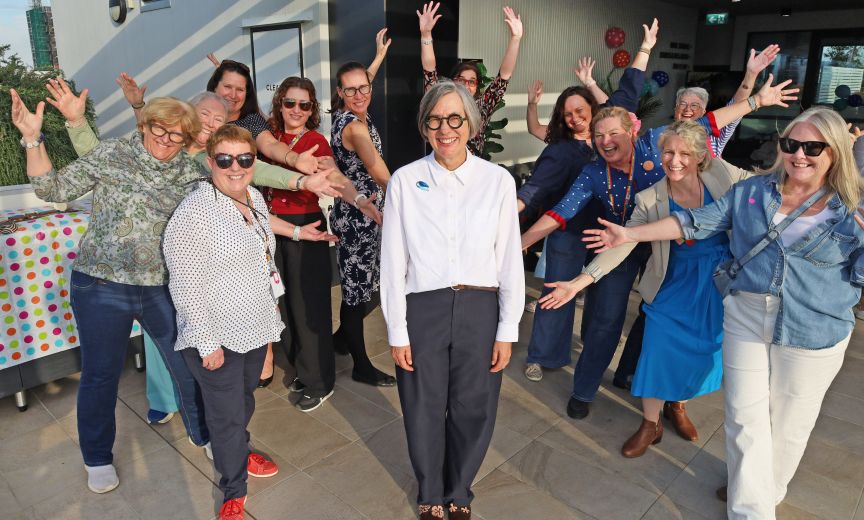
Reflecting on her career at a retirement celebration in August 2026, Kiley spoke about the people and formative experiences that shaped her approach to leadership and community rehabilitation.
“As a young, naïve person from Bundaberg, my social work placement with Sue Cumming in Fortitude Valley was where I learned a lot about life,” she said. “Connections to people, meeting them with compassion and understanding the bigger picture.
“Those key threads of working with people and applying public policy in the context of community rehabilitation show the difference we can make.”
That philosophy became the foundation of SPOT's success. Colleagues were quick to describe Kiley as a visionary leader whose unwavering commitment to people with spinal cord injury has helped shape many arms of the QSCIS service.
At her retirement celebration in August, QSCIS leader Dr Claire Panagoda and Acting SPOT Manager Jo Kemp reflected on Kiley’s inspiring leadership, compassion, insight and vision that have contributed to lasting impacts.
“Her relentless curiosity and humility have been pivotal in helping us understand the true needs of people with spinal cord injury across Queensland,” Dr Panagoda said.
Over the years, Kiley has championed innovation and co-design, helping drive initiatives including the BaSCI project, QuickStart, the QSCIS Knowledge Hub, the Compassion Revolution and development of the QSCIS Backbone.
For long-time colleague Delena Amsters, one of Kiley's greatest strengths was her ability to balance stability with change.
“Kiley was the first to adapt to new models of care, new ways of doing things and new technology. She was steady where it counts and open to change where it mattered,” Dr Amsters said.
“While the other long-serving member of our team - the 1995 SPOT Microsoft Access database - will be missed by no one, Kiley will be missed by absolutely everyone who ever worked with her.
“The database is not user-friendly, whereas Kiley is warm, friendly and supportive. The database was prone to corrupting and crashing but Kiley is famously unflappable.”
Professor Tim Geraghty reflected on Kiley's enduring contribution across SPOT, QSCIS and rehabilitation services more broadly.
“Kiley has been remarkable, constant, never wavering and always someone you could count on for support, leadership and dependability,” he said. “The services we established 30 years ago are a legacy of commitment to helping people with spinal cord injuries gain independence.”
Throughout her career, Kiley remained focused on ensuring specialist spinal cord injury expertise reached people beyond hospital walls. Her advocacy, collaborative leadership and commitment to innovation have strengthened support for clients, families, clinicians and communities throughout Queensland.
Kiley is also quick to recognise the many people who contributed to SPOT's success.
“I have been looking forward to celebrating the work that we have all done over 31 years to build SPOT and QSCIS,” she said. “You are all the future of the service, and I have valued the contribution of every one of you.”
While Kiley's retirement marks the end of an extraordinary chapter, the service she helped create over 30 years continues to thrive. SPOT remains a lifeline for Queenslanders living with spinal cord injury and a lasting testament to the vision, compassion and leadership of those who built and continue to shape the service.