
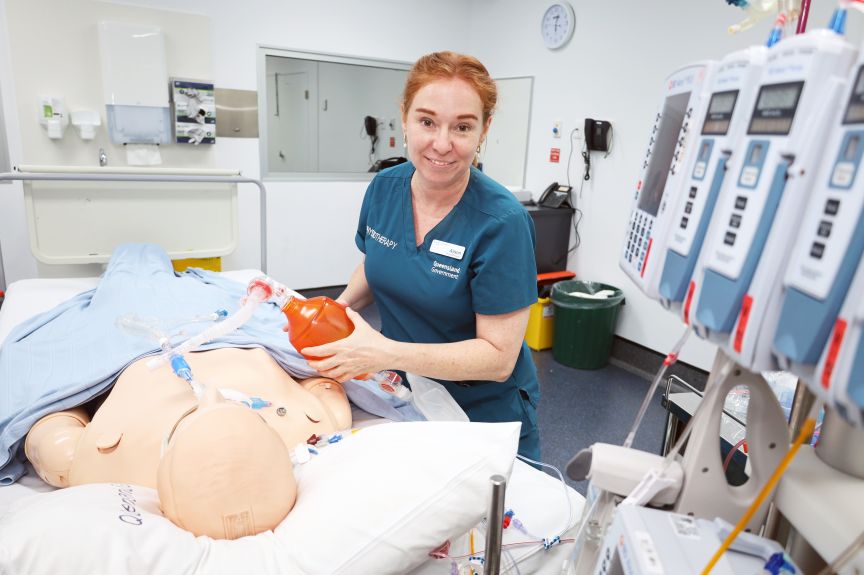
Allied Health Educator for physiotherapy in the Intensive Care Unit and clinician researcher, Alison Blunt, has been recognised as Allied Health Educator of the Year at the Princess Alexandra Hospital Research Symposium.
Alison is leading an allied health research team which includes Logan Hospital physiotherapists Penny Schofield and Vikki Schweitzer and psychologist Jessica Hampton, focused on improving support for physiotherapists affected by adverse events at work.
With almost 20 years at PAH, Alison was inspired by junior physios under her charge, her own experiences as a new physiotherapist and a desire to better understand how clinicians cope after challenging patient events.
"The physios I surveyed were a highly resilient group and strongly agreed with statements like I have become a better and safer clinician through these experiences," Alison said.
"But they reported significant physical and psychological stress symptoms."
Alison surveyed physiotherapists at Metro South Health about patient-related adverse events and how those experiences affected them professionally and personally.
Over 95% of surveyed staff said they wanted a respected peer to talk to for support after an adverse event.
"With the educator role comes with building non-clinical skills, the human side of patient interactions," she said.
"Healthcare workers prefer to talk to their peers because they feel understood."
Alison found that while physiotherapists are well-trained clinically, they do not have the same support frameworks to process adverse events as other clinicians.
She also found that physios may not have the same access to clinical debriefing.
"It's a hard thing to recognise all the staff present for an adverse event who may have been impacted," she said.
"At this hospital everyone wants the physios to come to clinical debriefing after an event, but due to differing shifts and the way we move around it can be hard."
In her role as Allied Health Educator, Alison observed that healthcare workers often carry concerns and stress long after an event has occurred.
"What people need when they are distressed is not to be told what they should have done," she said.
"They need some time to process their emotions and develop a plan to move forward."
By shining a light on an under-researched area of healthcare, Alison hopes the findings will strengthen peer support, improve access to debriefing opportunities and help physiotherapists feel better supported after adverse clinical events.