
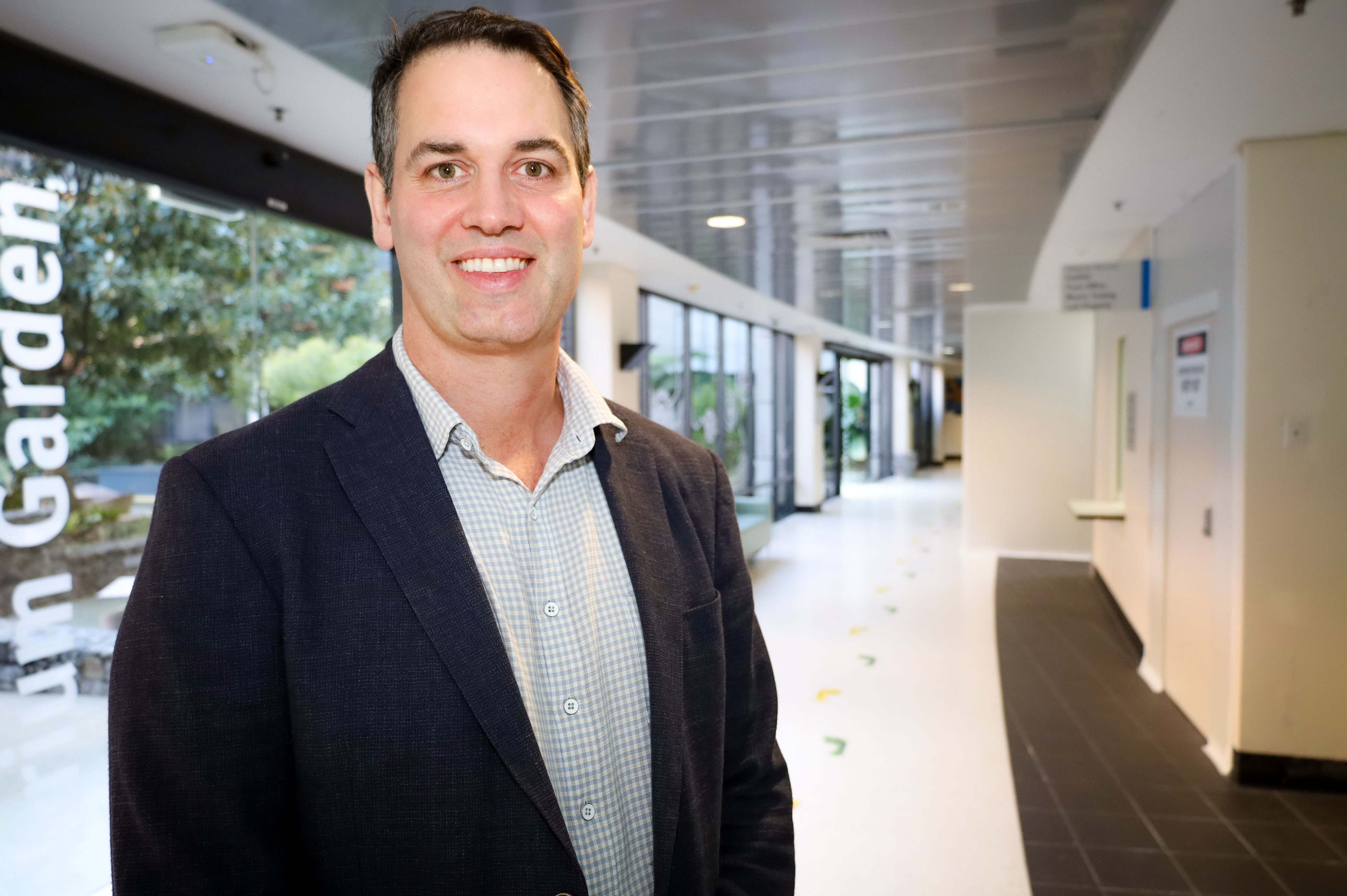
When surgeon Dr Philip Rowell first began working in orthopaedics more than 15 years ago, he didn't imagine his career would also involve helping unlock the mysteries of metastatic cancer.
Working alongside collaborators at the Translational Research Institute (TRI) and Mater Research, Dr Rowell said he is now contributing to research he hopes may help prevent dormant breast cancer cells in bone from reactivating years after treatment.
Co-led by Dr Behnam Rashidieh (Mater Research), his project Decoding Dormancy: Preventing Reactivation of Dormant Breast Cancer Cells in Bone, has received a $50,000 grant through the Leading Innovations through New Collaborations (LINC) grant program to better understand and prevent metastatic disease.
Dr Rowell said his interest in research developed during an overseas sarcoma fellowship in Toronto, where he saw firsthand the value of tissue-based research in improving understanding of rare cancers.
"In most cases, we were sending rare cancer tissue to The Princess Margaret Cancer Centre for research. When I returned to PAH, a colleague introduced me to a researcher at TRI who was looking for metastatic breast cancer bone samples, and things progressed from there."
Dr Rowell said while his clinical expertise lies in sarcoma surgery, the research has broader implications across many cancer types.
"Reactivation of cancer cells after systemic treatment is something we are trying to better understand across a range of cancers," he said.
"If we can better understand the signalling pathways and tumour microenvironment that allow tumour reactivation, we stand a chance of improving treatment and outcomes for patients in the future."
As the clinical lead, Dr Rowell's primary role is collecting valuable tissue samples for research. He said the LINC funding provides support for laboratory work and helps researchers maximise opportunities to study these rare cancers.
"In addition to breast cancer bone metastases, we're now involved in translational research investigating prostate, renal cell and lung cancer metastases, as well as osteosarcoma, Ewing's sarcoma, and several soft tissue sarcoma subtypes," Dr Rowell said.
"As a sarcoma surgeon, I'm hopeful we can raise awareness of this under-recognised cancer and ultimately contribute to improved treatments for patients who often face a guarded prognosis."
Dr Rowell said he is proud to be part of a multidisciplinary team progressing cancer research.
"I'd like to thank the research team at the Translational Research Institute for the incredible work they do and their growing interest in metastatic bone disease and sarcoma. There are some wonderful people doing outstanding work, and seeing the volume and quality of research taking place there has been incredibly inspiring."
Dr Rowell said the research brings a renewed sense of purpose to his clinical work.
“Behind every sample is a patient who has placed their trust in us,” he said.
“Our goal is to turn that trust into better outcomes, so fewer people have to face the fear of their cancer returning.”
Dr Philip Rowell is an academic title holder with UQ's Medical School.