
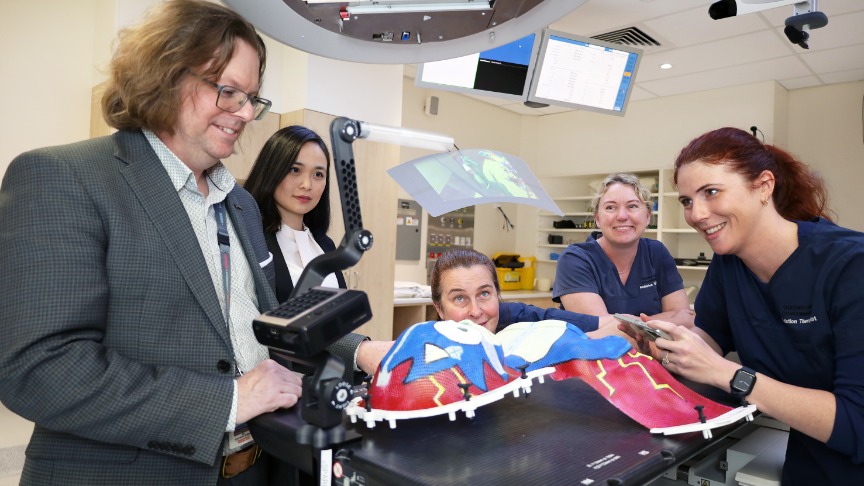
Research at Princess Alexandra Hospital’s Radiation Oncology centre at Raymond Terrace is making radiation therapy easier for children with SPARK.
Although radiation therapy is painless, the environment and equipment can sometimes cause anxiety, and children often need a general anaesthetic to help them stay still.
The research team including senior radiation therapist Narelle, physicist Lucy, radiation therapists Aimee and Jodi, and radiation oncologist Andrew undertook a project to find a way to keep children occupied and happy during their treatment and reduce the need for general anaesthesia.
The result was SPARK, which stands for Screen Platform Assistant-Radiation oncology Kids. It's a special 3D-printed, low-density screen that can be attached to the treatment couch so children can watch TV shows, movies or pictures.
“This helps children remain calm and still during treatment, reducing the need for a daily general anaesthetic,” said Narelle.
“One moment I'll never forget was seeing one of our first patients successfully complete treatment while completely engaged in watching their favourite show. Seeing a child relaxed and comfortable instead of anxious was incredibly rewarding and reinforced that all the hard work had been worthwhile.”
Narelle has worked as a radiation therapist for over 35 years, with the past 19 years specialising in clinical research in radiation oncology at PAH.
“I work closely with doctors, radiation therapists, nurses, physicists, and other healthcare professionals to help bring new ideas into everyday practice. I especially enjoy projects that make treatment less stressful for patients and their families,” she said.
“SPARK was a true multidisciplinary collaboration involving five team members. Every person contributed their expertise to help bring the idea to life.
“Projects like SPARK improve the patient experience, reduce unnecessary procedures, make better use of healthcare resources, and demonstrate how patient-centred innovation can benefit both families and the health system.”
This project is just one way bright minds across Queensland Health are continually innovating to improve all aspects of patient care.
“Innovation doesn't always mean developing new medicines or expensive technology. Sometimes it's about looking at an everyday challenge and finding a better solution,” said Narelle.