
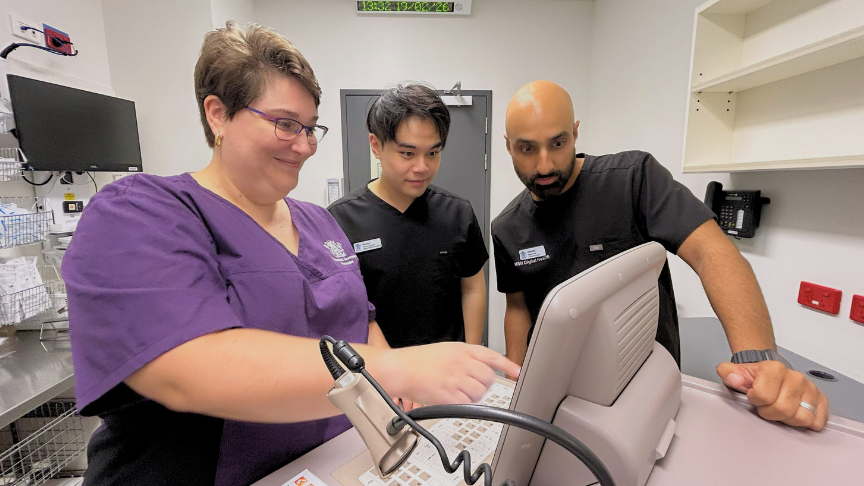
If you’ve walked through any of our hospitals recently, you’ve probably noticed Pyxis machines in wards, theatres and clinical areas. In just three years, Metro South has grown from 31 devices to 121, with more than 200 expected by 2028 — one of the largest fleets in Queensland.
According to Sarah McNutt, Medication Systems Manager with Digital Health and Informatics, the expansion is delivering meaningful improvements to both staff workflows and patient safety.
“Every new Pyxis means fewer medication errors — and that directly improves patient safety,” Sarah says. “It also means less time spent on manual tasks and more time with patients, which is where our staff want to be.”
Across the board, staff are feeling the difference. Nurses no longer need to search for safe keys or complete paper books for monitored medicines. In areas where Pyxis machines are linked to the electronic medicine chart, the benefits are even greater.
“The way Pyxis stores and dispenses monitored medicines means nurses don’t have to count them every shift – it’s a huge time saver,” she says.
Pharmacy teams are also benefiting from better stock visibility, automated alerts and fewer inventory losses. For theatres, Pyxis means anaesthetists have secure access to pain and sedation medicines right at the bedside — improving workflow and reducing delays.
While Metro South doesn’t yet have local time‑saving figures, published data shows Pyxis can reduce nursing time spent on medication administration by up to 80 per cent, or around 30 hours per month. Removing shift‑change safe counts alone can save 15–30 minutes per ward, every shift.
“When you take away those manual inventory tasks, you’re handing that time straight back to the patient,” Sarah says.
With the network continuing to grow, the long‑term benefits are clear: safer medication practices, reduced waste, smoother workflows and more time for patient‑centred care.