
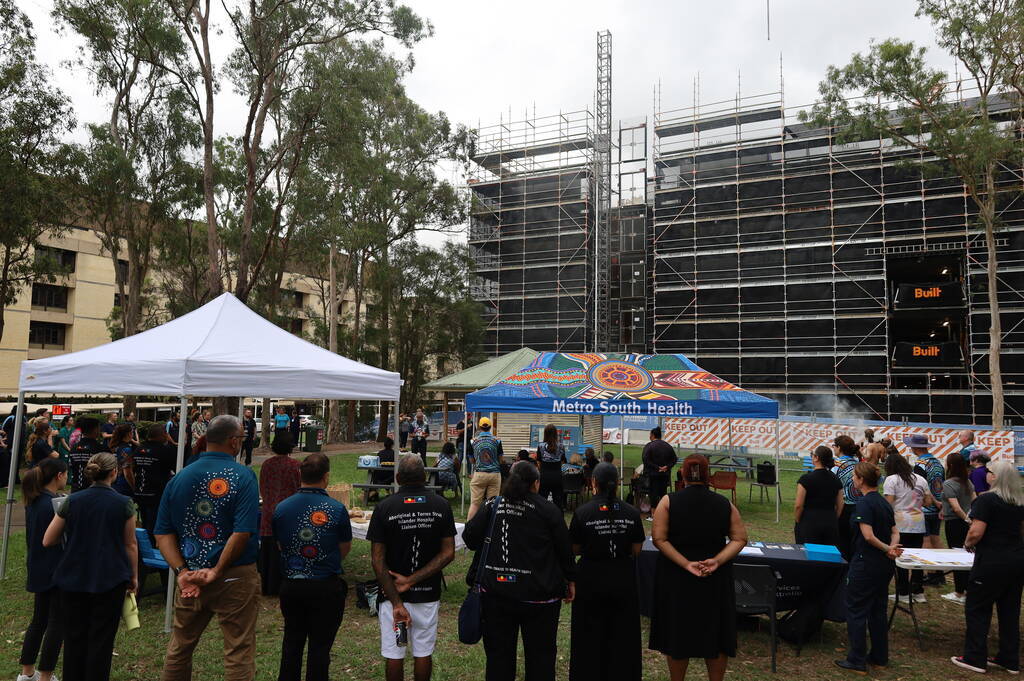
QEII Hospital staff and leadership have affirmed their commitment to bettering Aboriginal and Torres Strait Islander community health by holding a special event on hospital grounds for National Close the Gap Day.
Addressing staff, community representatives, patients and visitors at the event on 19 March, QEII Hospital Executive Director Gillian Campbell said closing the gap is a key priority for Metro South Health.
“I acknowledge the Yuggera people and welcome all our Aboriginal and Torres Strait Islander guests — it’s wonderful to see all our aunties who have turned out today.
“I have been at QEII for almost two years and to see you out here today supporting us and the work we do and the need to close the gap, to know we’ve got your support, and know we can start yarning further with you all about how we improve delivering our health services, is really so special.
“We look forward to the ongoing journey of ensuring we deliver our care in a way that meet’s community needs,” Gillian said.
QEII’s celebration of the day this year involved local Aboriginal and Torres Strait Islander stallholders, a food truck, and attendance by community and Elders groups, including Aunty Chrissy who donated one of her paintings and shared photos and stories of family life on land adjacent QEII at the historic Moorooka Aboriginal Camp, Toohey Forest.
“My painting is my interpretation of Moorooka Aboriginal Camp Dreaming, the centre focus in recognition of my Grandad Richard’s bush tucker garden at the camp that kept them all from starvation,” she said.
“I’ve had the privilege of personally inviting my family Elders — my mother, Aunty Sue Hansen, and Aunty Bubbles Williams, who were children at the camp, to join me, along with their families.”
QEII Cultural Capability Officer Brian Blow said National Close the Gap Day is set aside to focus on the need to improve health and socio-economic equality for Aboriginal and Torres Strait Islander peoples.
“It is a chance for QEII Hospital to showcase what we are doing to Close the Gap with the Metro South Aboriginal and Torres Strait Islander Community,” Brian said, referencing efforts to connect with local Elder groups, Aboriginal Medical Services and Mob Link.
“Other ways we are making a difference include forming our Making Tracks to Health Equity Committee, introducing Cultural Practice Program training, and incorporating traditional artwork in the Emergency Department.
“We’re grateful representatives from our Aboriginal and Torres Strait Islander community have chosen to bring their cultural knowledge, art and cuisine to QEII on this important day.”