
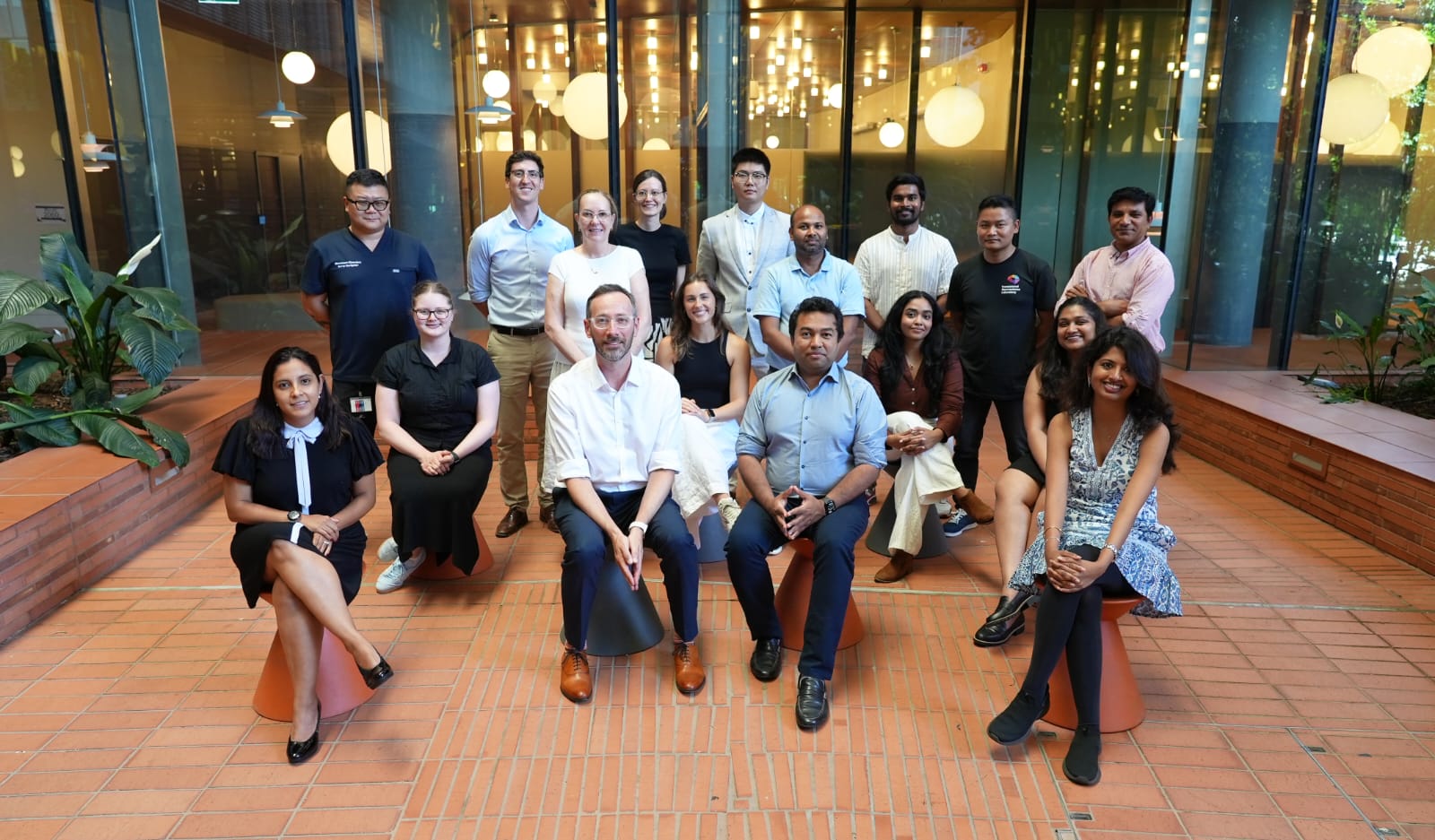
For Dr Alex Lehn (front second from left), research begins with the patients he sees every day in clinic.
As a neurologist at Princess Alexandra Hospital specialising in movement disorders, Dr Lehn is dedicated to improving the diagnosis, understanding and treatment of conditions including Parkinson's disease and Functional Neurological Disorder (FND).
Working across both clinical care and research, Dr Lehn is passionate about translating real-world clinical insights into practical, patient-centred treatments for people who are often misunderstood, misdiagnosed or left without clear management pathways.
“I was always drawn to the clinical side of movement disorders,” Dr Lehn said.
“These are conditions where careful observation, detailed examination and long-term relationships with patients really matter.”
While current therapies for many movement disorders remain focused on symptom management, Dr Lehn believes research is essential to improving long-term outcomes and advancing more personalised models of care.
Dr Lehn is Chair of the Movement Disorder Society of Australia and New Zealand Clinical Trials Network, where he plays a leading role in fostering collaboration across clinicians, researchers and trial sites throughout Australia and New Zealand. Through this work, he is helping expand patient access to emerging therapies and accelerate the translation of research into clinical practice.
Committed to improving access to information for patients and families, Dr Lehn has also established a series of public webinars for patients and caregivers. These webinars provide accessible updates on current movement disorder research and clinical trials taking place across Australia and New Zealand, helping patients stay informed about emerging therapies and opportunities to participate in research.
A major focus of his current work is investigating the role of the gut microbiome in Parkinson’s disease and FND, in collaboration with Associate Professor Richard Gordon and his team. The research explores how gut-derived inflammation and neurotoxic metabolites may contribute to disease progression, with the aim of identifying targets for future disease-modifying therapies.
Dr Lehn is actively involved in a broad range of clinical research programs, including both pharmaceutical industry-sponsored clinical trials and investigator-initiated studies. His work spans innovative stem-cell therapies, novel pharmacological treatments and translational research projects designed to improve patient outcomes and develop future disease-modifying therapies for movement disorders.
“The most rewarding part of my work is seeing research change how patients are treated, sometimes within the same hospital where the research was conducted,” he said.
Collaboration remains central to Dr Lehn’s approach, with strong partnerships across Princess Alexandra Hospital, the Translational Research Institute, and national and international research networks helping drive innovation in patient care.
Dr Lehn also acknowledges the importance of funding support from the PA Research Foundation.
“It provides the flexible funding that allows innovative ideas to get off the ground. Without this support, many clinically important research questions would never be explored.”