
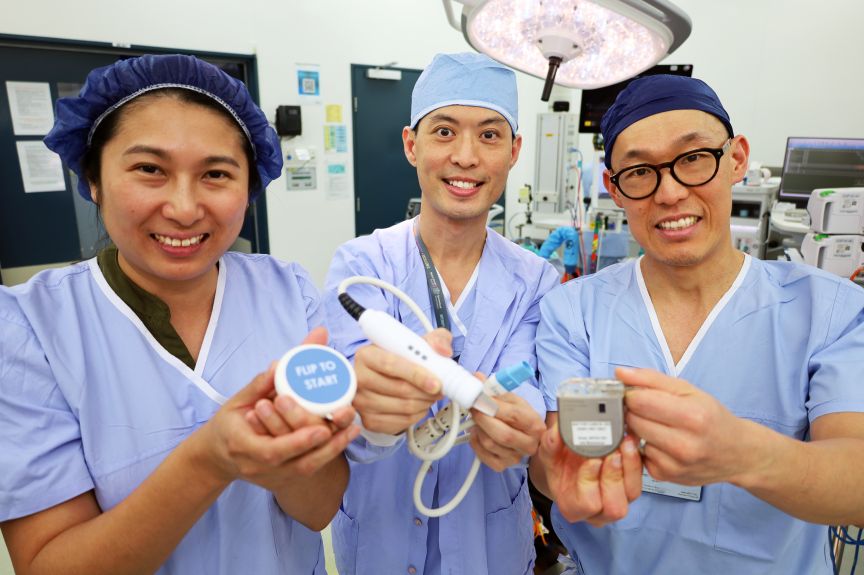
Princess Alexandra Hospital has successfully implanted the first patients in a first-in-human clinical study evaluating an innovative implantable therapy for people living with underactive bladder (UAB) and chronic non-obstructive urinary retention (NOUR).
The technology is designed to help restore bladder emptying and reduce reliance on catheterisation. This world-first clinical trial aims to enrol up to 15 patients.
Patients with UAB suffer from an inability to void sufficiently or at all, requiring them to painfully insert a catheter one or more times daily to empty their bladders.
Urologist and Professor of Surgery at the University of Queensland, Professor Eric Chung is a globally recognised expert in the treatment of underactive bladder.
“Having an innovative implant like this is a potential gamechanger and provides a critical advance in treating this difficult bladder condition and minimising UAB-associated complications,” said Prof Chung who is leading the study.
Self-catheterisation complicates patients’ social and work lives and negatively impacts their psychological wellbeing and quality-of-life.
Many patients start catheterisation but struggle to stay on the treatment due to the burden of managing their care and the cost associated with urinary catheterisation.
UAB patients experience urinary tract infections four times more often than those without the condition with sub-investigator, Urologist Associate Professor Handoo Rhee, warning the most significant risk of the condition is hospitalisation due to sepsis.
“The implantable device could reduce or eliminate catheter use, patients may experience less pain, and fewer UTIs and hospitalisations.”
Professor Chung, Associate Professor Rhee, and the PA Hospital team are leading this first-in-human study in conjunction with iota Biosciences, implanting the first patients in January 2026.
Innovating and evaluating this technology through the trial aims to transform treatment for patients living with an underactive bladder.
PA Hospital has an internationally recognised urology research program and continues to play a leading role in bringing innovative therapies to patients through early clinical research.
The study will continue to enrol eligible patients over the coming months as investigators evaluate this novel therapy for underactive bladder.
People with UAB or NOUR who would like to be assessed for inclusion in the trial can be referred by their GP or Urologist to the Princess Alexandra Hospital Urology department.
To find out more about this clinical trial, visit Study Details | NCT06956209 | First In Human | ClinicalTrials.gov