
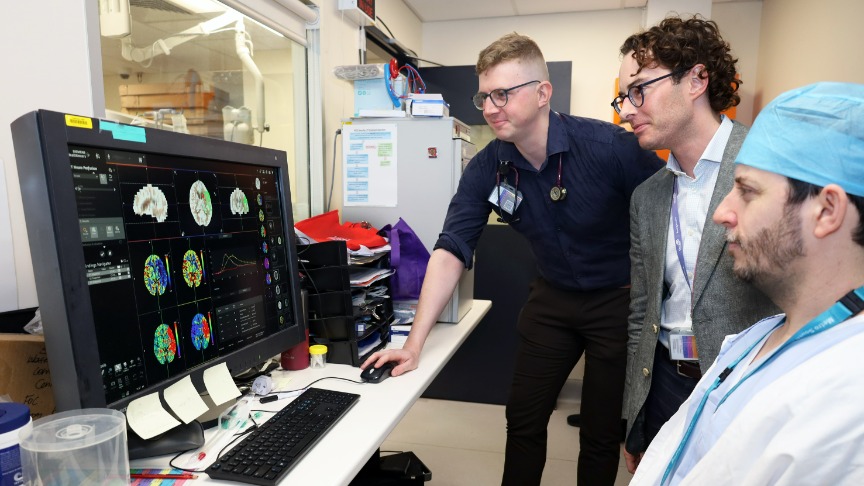
The stroke unit at Princess Alexandra Hospital has been awarded the prestigious World Stroke Organization (WSO) Angels Platinum Award making it the first hospital in Queensland and one of just fifteen hospitals in Australia to achieve this elite status.
The award is the latest in consecutive international awards for meeting the highest standards in stroke treatment and care after previously attaining WSO Gold Status.
The Angels initiative, a partnership between the World Stroke Organization, European Stroke Organisation and Boehringer Ingelheim, aims to optimise the standard of treatment in stroke centres worldwide and improve patient outcomes by setting global benchmarks for best practice stroke care.
PAH Stroke Unit Clinical Nurse Consultant Melissa Brooks said achieving WSO Angels Platinum Status was an enormous honour and testament to a team effort to enhance stroke care in the local area.
“At the start of 2025, we set our sights on receiving a WSO Angels award every quarter. We have worked tirelessly to improve the care we deliver, reviewing each case with clinicians involved, identifying areas for improvement,” she said.
PAH Consultant Neurologist and Stroke Unit Medical Lead, Dr Michael Devlin said the team was thrilled to achieve WSO Gold Status last quarter.
“We are even prouder to see the hospital improve upon that benchmark to receive Platinum Status for this quarter, especially since this was achieved during a period when we were managing an unprecedented number of stroke presentations at the PA,” Dr Devlin said.
“This new award recognises our combined efforts from all involved in stroke care at PAH, and an ongoing commitment to improve stroke care in the community.”
PAH treats approximately 700 strokes each year. Training, protocols and the performance of the hospital’s stroke unit were assessed as part of the Angels Initiative. For WSO Platinum status, this includes a target of restoring blood-flow to the brain to more than 75 per cent of eligible patients within 60 minutes of their hospital arrival.
“Stroke is a time-critical medical emergency where blood supply to the brain is interrupted or reduced. With every passing minute brain cells can be lost and the risk of disability and death increases,” Dr Devlin said.
“Acting swiftly on the signs of stroke and implementing best practice care requires almost seamless coordination between ambulance, emergency department, radiology and stroke unit staff,” he said.
“Ensuring appropriate patients receive clot-busting therapy within 60 minutes of arriving at the hospital door requires extraordinary teamwork and consistency but means that more people will survive and live well after stroke.”
To achieve WSO Platinum status a hospital must demonstrate a range of outcomes, including optimum time to treatment, coordinated care, appropriate scans and screening, and ensuring patients are discharged from hospital on medications to minimise the risk of further stroke.
The stroke team were also thrilled to receive this award during Stroke Week, partnering with The Angels Initiative and the Stroke Foundation to celebrate with the people who contribute to stroke outcomes every day.
Neurology Director Laura Clark praised the team for the amount of work and amount of dedicated time they put into patient care.
“It’s nice to have it formally recognised, but I also want to say that I recognise it every day,” she said.
“I think our colleagues across Metro South also recognise the amount of work this team does to support them in their practice, so a big thank you to everyone and well done.”
About Stroke in Australia
- One stroke occurs every 11 minutes in Australia.
- Close to half a million survivors of stroke are currently living in Australia.
- 125,000 years of healthy life were lost due to stroke in 2024.
- The economic cost of stroke in 2023 was over $15.7 billion over a lifetime.
- Improving the rate of uncontrolled hypertension could save $315 million annually.
- 24% of strokes occur in Australians aged 18-54 years.
- A national Stroke Foundation survey showed that 60% of Australians cannot name any of the most common signs of stroke.
- In Australia only 38% of patients reach hospital within the critical 4.5 hour window.