
Summary
- Hearing problems are common in First Nations populations – particularly in young children.
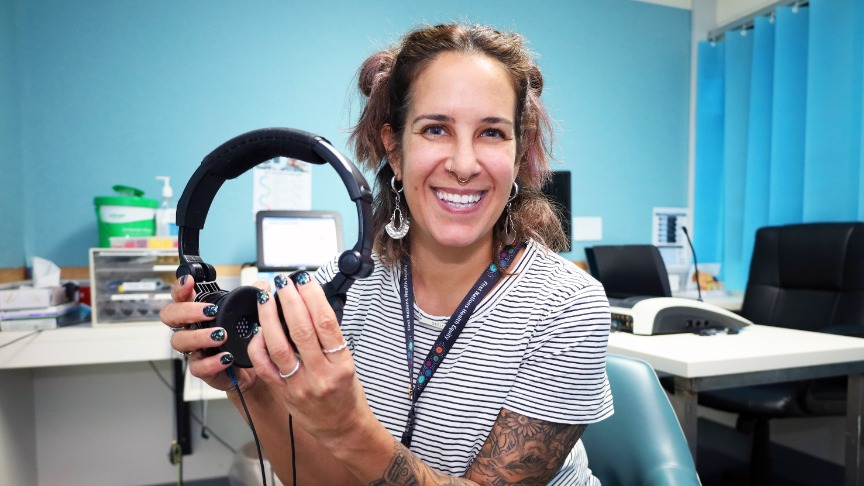
- Audiologist Ann Cross experienced childhood hearing problems which drives her passion to improve hearing health within her community.
- Her work embraces partnerships to drive improvements in hearing health outcomes.
For PA Hospital Audiologist, Ann Cross, it is her lived experience of hearing problems as a child that attuned her to a career in Audiology.
“Hearing problems are really common in the indigenous population and are a major contributor to learning impacts for any child who starts out with an undiagnosed hearing problem,” Ann said.
A proud Yidinji woman, Ann is passionate about hearing for people from Aboriginal and Torres Strait Islander communities and is driven by the need to give back and help with intervention and support.
“Being able to do something for all children, particularly indigenous kids during those first couple of years of life, helps them to hear and speak well,” she said.
“Early childhood from birth to eight years is a foundational time of development that impacts all future milestones, and it is essential that children have hearing checks to make sure their progress won’t be impacted.”
Motivated by this quest, Ann’s tertiary studies led to her employment with Hearing Australia for 12 years where she was part of nation’s largest provider of government-funded hearing services for children and young adults, eligible Aboriginal and Torres Strait Islander people, pensioners and veterans.
“I’ve been fortunate to do outreach work to remote locations in Queensland, where I’ve seen first-hand that hearing loss and otitis media is common among Indigenous children, occurring earlier, more often, and with greater severity.
“These conditions can have lifelong impacts on health, education, communication, and wellbeing, yet hearing is often undervalued until it is impaired,” she said.
The chance to be part of hospital-based audiology at PA Hospital presented this year. Ann was quick to grab the opportunity for this rewarding specialist pathway for her professional career.
“What I love about audiology is the opportunity to make a real difference in people's lives through accessible and culturally appropriate hearing care.
“I enjoy working with a diverse, multicultural clientele and value our PAH initiatives like our hearing aid bank, which improves hearing rehabilitation access for applicable patients,” Ann said.
She advocates for strengthening the impact of health services for the community by continuing to build meaningful partnerships.
One of these partnerships with the Inala Indigenous Health Service is an important step in streamlining and delivering culturally safe audiology services, helping to improve access, engagement, and health outcomes for Aboriginal and Torres Strait Islander peoples.
“Health equity means recognising that not everyone has the same access to care, and we can reduce barriers in a way that is culturally safe, trusted, and responsive to their needs by working alongside communities,” she said.
“With strong leadership and a shared commitment to equity, we can continue to make a meaningful difference where it is needed most.”
Thank you to Ann and the Audiology team for prioritising good hearing and effective communication so our diverse community can embrace independence, participation, and enjoy overall quality of life.