
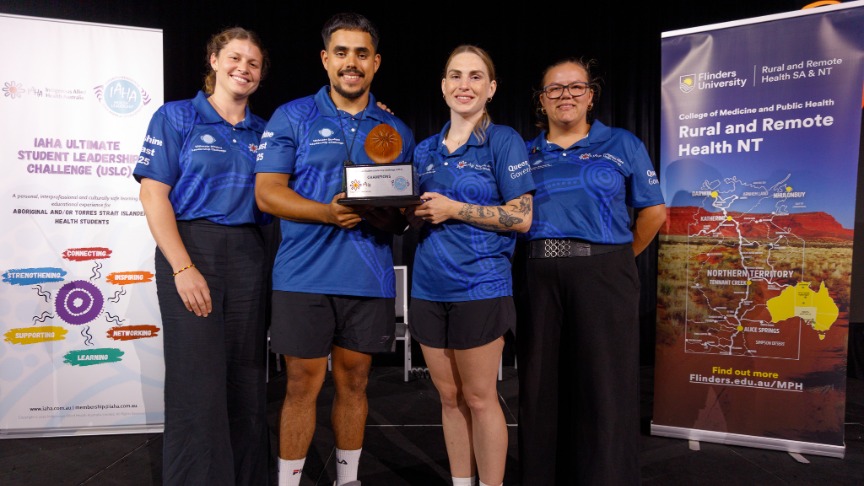
First Nations Allied Health Cadets at Metro South Health are embracing their leadership potential, after being selected to participate in a national leadership challenge.
Indigenous Allied Health Australia invites select Aboriginal and/or Torres Strait Islander allied health students from across the country to participate in the annual Ultimate Student Leadership Challenge (USLC), and attend the concurrent IAHA National Conference.
Three cadets from Metro South Health were selected for the 2025 event, with funding provided by Queensland Health’s Office of the Chief Allied Health Officer.
The three-day cultural and professional leadership program invites identified allied health students to collaborate on complex Aboriginal and/or Torres Strait Islander case simulations in a multidisciplinary team. Together, the cadets are challenged to apply a professional and culturally sensitive lens to each case, guiding a more holistic approach to healthcare delivery.
Experienced mentors and facilitators guide the cadets through workshops, enhancing cultural and professional learning. Chastina Heck, MSH identified Workforce Development Officer was one such mentor empowering students with insights as to how culture can be centred in healthcare.
First Nations Psychology Cadet, Brooklyn Whitmore presented her honours thesis at the event, where she gained invaluable insights and guidance to support her early career and research journey.
“I learned the power of Indigenous-led research, storytelling, and leadership in driving meaningful change within healthcare systems,” she said.
“I also learned that workforce development is not just about recruitment, but about creating environments where mob feel supported, culturally safe, and able to thrive long-term. [It] reinforced the importance of relationships, accountability, and collective responsibility in improving outcomes for both workforce and community.
“It is an invaluable opportunity to build confidence, share work that matters, connect with Indigenous leaders, and see what is possible within allied health,” she said.
Cadets consistently reported a strong feeling of connection and support gained from working alongside other Aboriginal and Torres Strait Islander students and mentors with shared experiences.
Exercise Physiologist Cadet at the Southern Queensland Centre of Excellence (CoE), Shaymus Malone said working alongside mob empowered him to reframe his approach to health delivery.
“There is an automatic sense of connection when you meet other Aboriginal and Torres Strait Islander people working in different places and professions. One of my biggest takeaways was learning to step back from only thinking through a university or clinical lens and instead think like a black fella first. It reinforced the importance of integrating my cultural knowledge with my professional knowledge to shape the way I provide care,” he explained.
“The USLC helped me better understand larger organisations such as Queensland Health from the perspective of a black fella. It also helped me develop skills, knowledge, and confidence to navigate my professional journey with support from the IAHA team and other mob in health.”
Importantly, the program enables Cadets to strengthen their ability to articulate, translate and meaningfully apply cultural understanding within the clinical context.
Metro South Allied Health Pharmacy Cadet, Tahlia O’Hara echoed the importance of centring cultural values to enhance clinical outcomes for mob.
“I was extremely grateful for my team. Our approach was grounding, settled, and relational. We valued calmness, enjoyment, and friendship as the core of our teamwork, where we simultaneously strived for our best. This team environment helped me recentre my own values, where I wear this experience as a reminder that the people around me matter more than the result,” she explained.
“Our Cultural Mentors and Team Facilitators... were the familiar faces of encouragement, wisdom, and forgiveness. These people helped shape our education by providing us with what our universities tend to unfortunately lack when it comes to our First Peoples care: cultural knowledge, experience, understanding, credibility, Dadirri, and strong cultural identity. And this is why the IAHA USLC is so valuable.”