
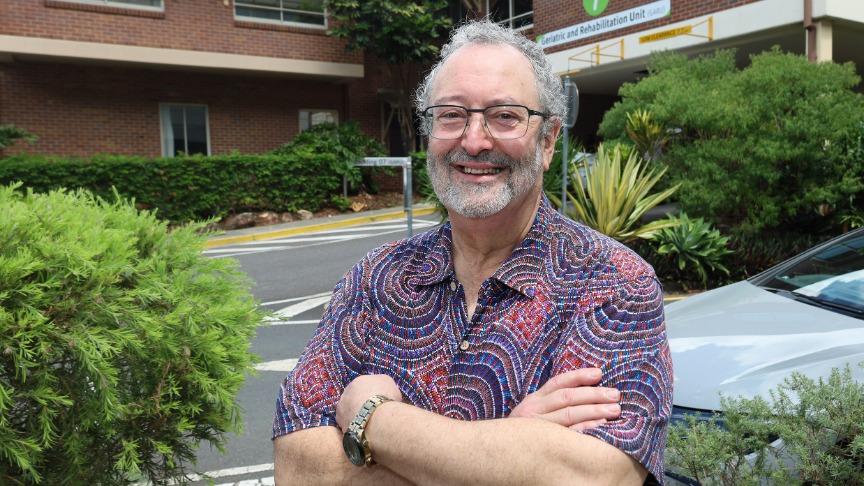
PA Hospital Geriatrician Dr Phil Aitken was mentored into the specialty of geriatrics during its infancy through the inspiration of many. He now holds a place in that illustrious row of mentors contributing to the powerhouse specialty that geriatrics is today.
He was the first Queensland medical trainee in geriatrics in 20 years when he undertook his placement at PAH 45 years ago and said it was a general medicine term at PA that charted his course at the hospital.
“I found PAH was a friendly and supportive environment for learning and I have been proud to call this hospital home for most of my career,” the recent retiree said.
“I did rotations in General Medicine and Gastroenterology, and I really liked gastro but to remain at PAH I had to do a term of geriatrics; this was when I realised what I wanted to do.”
With amazing teachers such as Dr Glenise Berry, Dr Keith Hirschfeld, Dr Glenda Powell, Dr Ian McCracken, and Dr Paul Hopkins, it is no wonder he cleaved to the specialty, became a mentor of influence in his own right and went on to pave the way for a new specialty service.
During his years in England as a registrar in neurology and geriatrics, he undertook some stroke studies - one of which was used by renowned Professor Peter Langhorne to validate and set up Stroke Units. This would lay a foundation and inspiration for a service dedicated to post-stroke care and rehabilitation for patients at PAH.
“One of the proudest moments of my career was my involvement to start the Stroke Unit which opened in October 1997,” Dr Aitken said. “We set up as a triumvirate of geriatrics, general medicine and neurology, taking turns being on-call but we all looked after these patients.
“We worked hard on the Stroke Society guidelines and KPI’s and PAH is now consistently the highest performing Stroke Unit in Queensland and Australia.”
Dr Aitken is first to acknowledge the close collaboration of neurologists, general medicine, nursing and allied health professions in the acute and post-acute management of stroke rehabilitation and is delighted to have played any small part in inspiring clinical interest in geriatrics and stroke care.
“At the end of one of my lectures at the old Schonell Theatre, a bloke congratulated me on keeping the student’s attention. If that’s the measure then I can probably say I succeeded in making geriatrics sexy to the next generation of medicos using anecdotes and humour,” he said.
“Ultimately, the collaborative and collegial atmosphere we have created for learning and treating patients is key to anyone gravitating to geriatrics and I hope my mentorship and commitment to these patients has influenced others.”