
With more than 31 percent of the region’s population born overseas and over 200 languages spoken, Metro South is home to one of Queensland’s most culturally diverse communities.
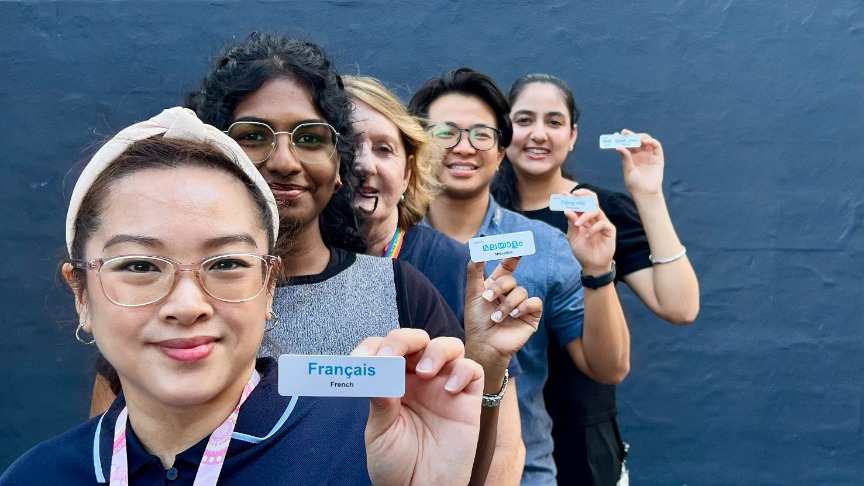
In 2026, a Quality Activity Project is empowering Social Work students on placement at MSH to participate in the Language Badge initiative, which was previously limited to staff members.
Metro South’s Social Work Clinical Educators led the project rollout in partnership with Sandrine Dinevan from the Health Equity and Access Team (HEAT) earlier this year, with students quickly taking up the opportunity to participate.
“To date, three social work students across MSH have taken up a language identification badge, with languages spoken including Malayalam, Hindi, Punjabi and Vietnamese,” explained MSH Social Work Clinical Educator, Sandra Young.
“Though we are still very early in the project, the participating students are feeling positive about their culture and their respective languages.”
Students are set up for success with supporting educational resources, focus groups and opportunities for feedback throughout their placements, ensuring a culturally responsive approach that fortifies the placement experience.
“It’s an opportunity to provide a safe space for others in the healthcare system, while strengthening the connection between students and their supervisors as they share in discussions about culture.”
Beyond the badge, participating students are empowered to broaden their scope and explore new ways of supporting CALD consumers.
“It’s our goal to increase the sense of self-agency among CALD Social Work students. That includes education for students about how to use and not use their language badges.
Sandra and Sandrine are excited to offer the students an immersive placement experience in 2026 and beyond: one that empowers its future workforce and meets the needs of its growing community to deliver truly person-centred care at the front line.
“Social Work field placements are 18-week placements, which provide students with a rich learning environment to develop clinical skills and knowledge to provide health services to MSH consumers.
“Social workers apply an intersectional perspective to the complexities around culture and diverse identities in society. They practise with a clear and critical understanding of how different aspects of a person’s social and political identities can expose them to the overlapping and compounding effects of discrimination, stigma and power imbalances,” Sandra explained.
While it’s still early days, Sandra says the positive impacts of the rollout are echoing far beyond the Social Work Clinical Education Program.
“An unanticipated outcome of this initiative has been in the early days of this project. When seeking support from Social Work directors and team leaders in ordering language badges for students, it has raised awareness across MSH Social Work services and increased the number of Social Work staff who speak additional languages to order their own language badges!
“We are optimistic that Social Work is leading the way for our colleagues in other disciplines to consider the We speak your language identification badge initiative.”