
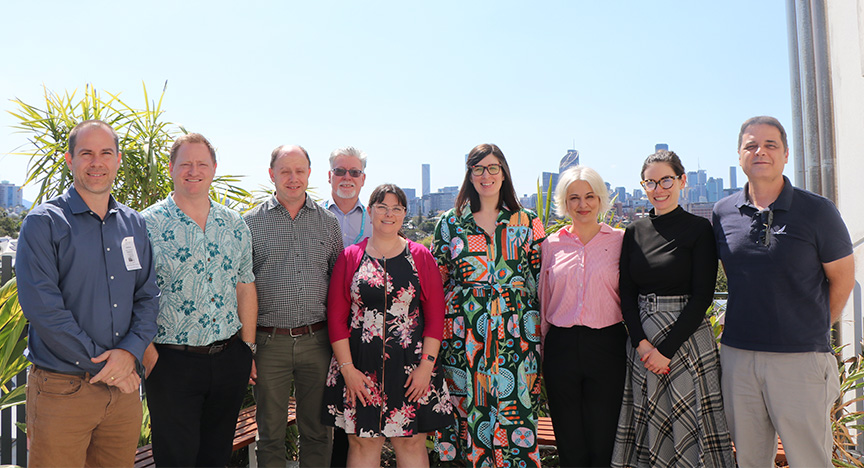
Metro South Health’s Zika Mozzie Seeker project is now part of a major Australian research grant combining genomics, public health and citizen science to better protect Australians from mosquito-borne diseases.
Associate Professor Gordana Rašić from QIMR Berghofer’s Mosquito Genomics Laboratory was recently awarded a Medical Research Futures Fund (MRFF) Genomics Health Futures grant and will lead a new project to improve surveillance for invasive urban mosquitoes and mosquito-borne viruses.
The research team will link genomics-based early detection tools to citizen science platforms.
“The aims of this project are to improve early warning programs for invasive urban mosquitoes and to create a new platform to monitor mosquito-borne viruses by linking citizen scientists to innovations in science, health, and education,” Associate Professor Rašić said.
The $2.8 million grant over four years will innovate surveillance to help reduce the risk of mosquito disease outbreaks in Southeast Queensland.
“Mosquito diseases are placing an increasing burden on the health of communities and detecting virus activity and invasive urban mozzies is currently very difficult for health authorities,” she said.
“This research project is built around the success of citizen science as demonstrated by Zika Mozzie Seeker and we are excited to partner with Metro South Health to develop tools that may help identify suburbs at higher risk of invasion by Zika mozzies.
“Communities can play a major role in reducing risks by adopting personal behaviours that reduce mosquito bites and reducing mosquito breeding sites in the yards of homes and businesses.
“Partnership with community members that are willing to volunteer to be citizen scientists offers a massive potential to unlock the capability for large, sustainable, and scalable surveillance programs.”
Brian Montgomery, Advanced Medical Entomologist at the Metro South Public Health Unit said 10 per cent of mosquito eggs collected in upcoming rounds of Zika Mozzie Seeker would be donated to QIMR Berghofer for the research project.
“Metro South Health and Zika Mozzie Seekers have led the way in demonstrating the success of citizen science in invasive mosquito surveillance,” he said.
“We hope that by adding genomics testing of Zika Mozzie Seeker eggs through this research project, that a tool will be created to predict suburbs most at-risk of Zika mozzie invasions.”
As part of the grant, Metro South Health will assist in developing a learning module for Brisbane South State Secondary College.
“The school-based monitoring strategy will focus on developing a method for sampling in suburbs where community participation is low whilst introducing students to a public health challenge of the future through an innovative STEM module and a citizen science educational opportunity,” Brian said.
Brian will present on Zika Mozzie Seeker and provide an update on this exciting research project at this month’s Australian Citizen Science Association Conference (CitSciOz25).
If you are interested in contributing to this important research, you can register for Zika Mozzie Seeker here.