
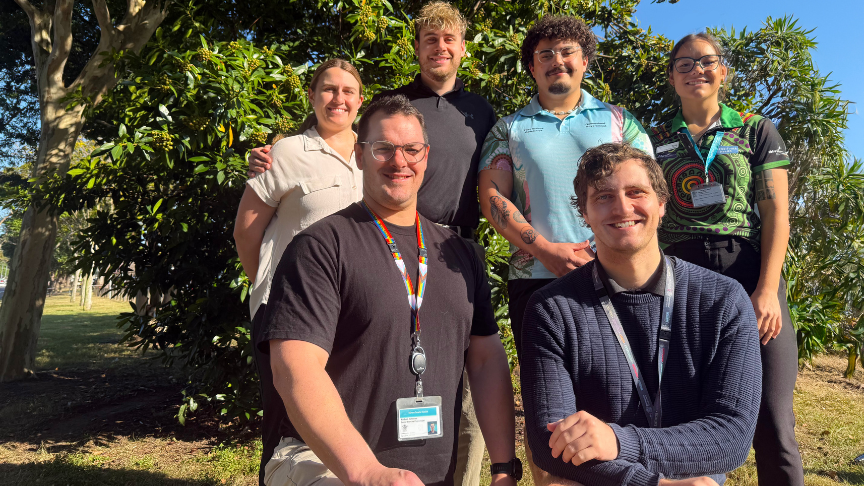
Metro South Addiction and Mental Health Services is celebrating a major milestone for its Exercise Physiology program, with new permanent funding set to expand the team and its impact across the region.
Acting Professional Lead for Exercise Physiology, Talia McIntosh, said the service had achieved a big win this year following successful pilot programs and contribution to statewide events and initiatives
“We’ve been able to secure five full-time equivalent positions, on top of our existing team, which is a huge step forward,” said Talia.
“Exercise Physiology is a growing discipline in mental health and there’s now so much evidence showing how important it is for people with mental illness to move more. It’s fantastic to see that work recognised.”
The pilot, which began in January, saw Nathan Johnson and Jay Creeks join the service to trial full-time Exercise Physiology roles across Community Care Units, Continuing Care Teams, ACMENA, Youth Step Up Step Down, and the Adolescent Day Program. Their work, alongside longstanding team members, demonstrated the power of physical activity in improving both physical and mental health outcomes. The pilot’s success elicited further interest across addictions services and the specialist eating disorder service in recent months.
“People living with severe mental illness face a 15 to 30-year reduction in life expectancy compared to the general population, largely due to preventable physical health conditions,” said Talia.
“Exercise can play a huge role in reducing that gap.”
“When people feel physically well, their mental health outcomes are usually better too,” said Nathan.
“We’re helping people live longer, healthier lives and giving them back the confidence to do things they love, like playing sport with their kids or even just walking to the shops without getting out of breath.”
“Many antipsychotic medications can cause rapid weight gain and increase the risk of cardiometabolic disease,” said Jay.
“We work with people to find safe, enjoyable ways to move their bodies, celebrate small wins, and rebuild confidence.”
While gym sessions are part of the program, the team emphasises that exercise physiology isn’t one-size-fits-all. From balance training to reduce falls in older adults, to group sports and circuit classes that build social connection, the team tailors’ activities to each person.
“Not everyone wants to lift weights,” said Nathan.
“It might be dance, walking, basketball, anything that gets people moving in ways they enjoy. That’s what keeps them coming back.”
Exercise sessions also provide a non-stigmatised way for people to engage with mental health services.
“Sometimes sitting down for therapy can feel overwhelming,” Talia explained.
“Exercise can be that first point of engagement, it’s normal, enjoyable, and gives people autonomy over their care.”
The expansion also reflects a broader recognition of the role exercise physiologists play across Metro South Health, from pulmonary rehabilitation and renal care through to brain injury services.
As the team prepares to mark World Clinical Exercise Physiology Day on 23 September, they hope more people understand the power of movement.
“Exercise is medicine,” Talia said.
“It’s not just about physical health. It’s about hope, connection, and giving people the tools to live their best lives.”