
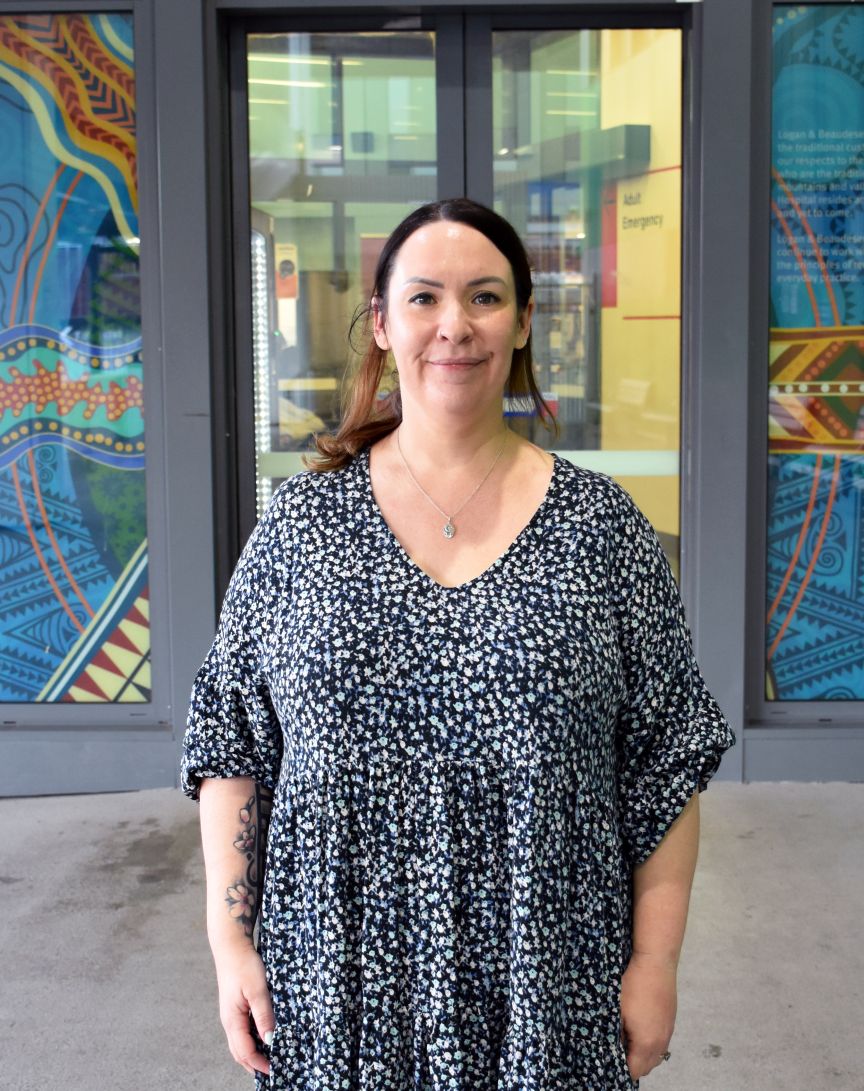
Nursing is in the blood for Addiction and Mental Health Service (AMHS) Nurse Navigator Kirsty Wesener, whose parents also worked as mental health nurses.
Originally from Scotland, Kirsty arrived in Australia in 2018 with a Bachelor of Mental Health Nursing and a plan to travel.
After working in rural, remote and metro communities around Queensland, Kirsty has settled at Logan Hospital as a Mental Health Emergency Department Nurse Navigator.
In her role, Kirsty supports adults experiencing mental health crises who frequently present to Logan Hospital's Emergency Department (ED).
Kirsty said her focus was on helping consumers find safe, appropriate alternatives in the community that supported recovery and reduced the need for repeated ED presentations.
"I work particularly closely with some wonderful NGOs in our community who offer support in various ways, including helping people re-engage with employment and other aspects of everyday life," she said.
Asked what she enjoys most about her role, Kirsty said it was the opportunity to empower consumers and work alongside community partners.
She described the Nurse Navigator role as both challenging and rewarding, with no two days ever looking the same.
“Some days are spent in the ED supporting consumers in crisis, while others involve meeting people in the community and helping them attend appointments and connect with services,” she said.
A key part of the role is building trust.
"Building rapport takes time, as does helping people understand my role in their healthcare journey," she said.
“I explain to consumers that a Nurse Navigator acts as a consistent point of contact between them and the many healthcare professionals and services involved in their care.
"I can help navigate consumers through what can be a very complex healthcare system, while also promoting independent recovery and encouraging people to take ownership of their healthcare journey," she said.
Alongside her clinical work, Kirsty is working on a quality improvement project focused on improving the management of intoxication in the ED.
The project aims to streamline consumers' journeys through the department, reduce length of stays and improve both patient and staff experiences.
"I'm a strong advocate for improving outcomes for people experiencing addiction and mental health challenges," she said. "That means improving care for consumers, while also supporting staff and reducing exposure to occupational violence in the department."
For Kirsty, the work is ultimately about helping people feel supported, connected and empowered to take the next step in their recovery.