
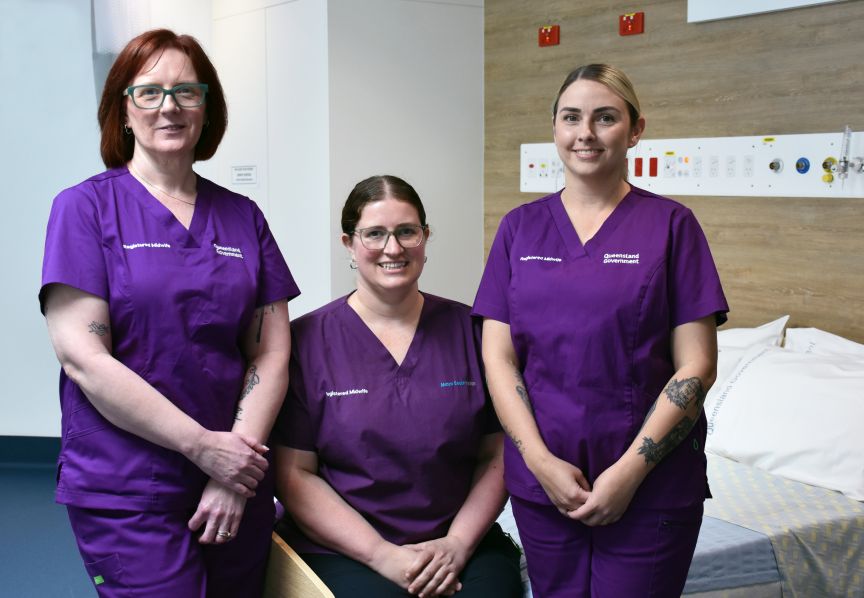
A small, close-knit team of midwives at Logan Hospital is providing a special kind of care during times of overwhelming grief.
Working with families experiencing the tragic loss of a baby, bereavement midwives Bec Simmons, Kailean Kohlweg and Carrie Wilson are dedicated to making a difference when it matters most.
Supporting families experiencing pregnancy loss, stillbirth, neonatal death, the compassion and care is always the same - ensuring everyone is heard, wishes are respected and opportunities provided to spend time with their babies to make treasured, life-long memories and mementos.
“Their journey is about us being present, compassionate and flexible, because every family will experience grief differently,” they said.
“Families are given as much time as they need with their baby, and we support memory - making through bathing, dressing, the taking of hand and footprints and photographs, storytelling, and time outdoors in the garden.
“We make their time together meaningful by treating their baby just as we would any baby; talking to baby when providing cares, pointing out features that are mum's or dad's or how they might be similar to a sibling.”
The team said it was also important that families were able to make decisions at their own pace.
“We take the time to understand what is important to them, explain their options clearly, and give them the time and space to make decisions that feel right for their family.
“It is about acknowledging their baby, validating their family’s grief and providing compassionate, individualised care at a time when they may feel completely overwhelmed.
“Families need to feel heard and that starts with listening. We try not to make assumptions about what a family needs or how they should grieve.”
They said continuity was an integral part of supportive, compassionate bereavement care.
“A small, consistent care team is vital during loss, as it allows families to build trust and avoid repeatedly retelling their story.
“Having a midwife who knows their story, remembers their baby’s name, and who can support them through their admission and follow-up helps families feel that they haven’t been forgotten.”
Unlike other midwives providing care primarily during a hospital admission, the bereavement service team continues supporting families long after they have returned home.
“Our support continues after discharge for as long as families need it, whether that is weeks or months,” they said. “We make sure families know that their baby is remembered and that they haven’t simply been discharged and left to grieve alone.
“We help families navigate the practical and emotional aspects of their loss which might include paperwork, investigations, and funeral arrangements.
“We check in, help them understand investigation results and connect them with appropriate ongoing supports such as GPs, counselling, perinatal mental health services and grief organisations.
“Sometimes it is as simple as being the person they can contact when they have a question, weeks or months later, remembering their baby and acknowledging important dates.
“That continuity and genuine human connection is at the heart of bereavement care.”
The team said they hoped initiatives such as Wave of Light, held on 15 October each year to mark International Pregnancy and Infant Loss Remembrance Day and Baby Loss Awareness Week, reminded families that their baby was still part of their family and that their loss was recognised beyond the hospital.
“Sometimes people feel unsure about what to say or worry that mentioning the baby will make things harder, but for many families, having their baby remembered and acknowledged is incredibly important.
“Too often it remains a silent subject, leaving parents feeling isolated. More open conversations about pregnancy and baby loss within the community can help families feel supported.”