
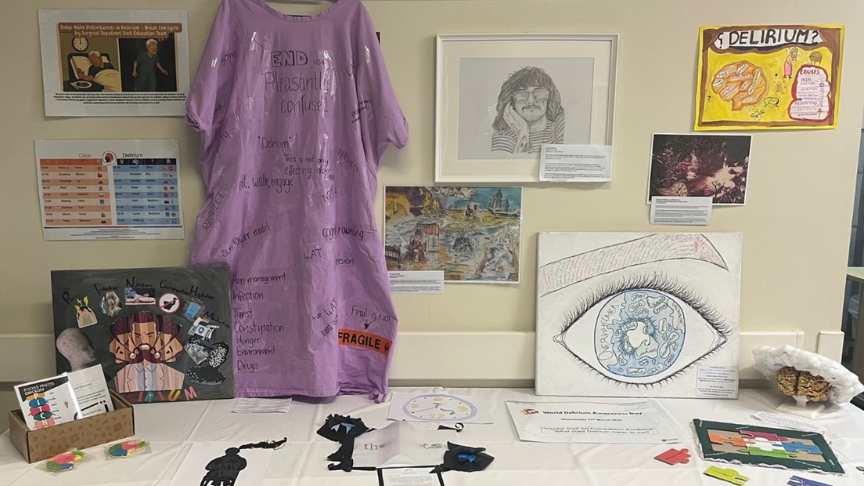
Logan Hospital staff have taken a creative approach to an important patient safety issue, marking this year’s World Delirium Awareness Day with a delirium art competition.
Led by the Cognitively Impaired Older Persons Special Interest Group, the inaugural competition attracted 15 entries from across the hospital.
Nurse Manager Clinical Governance and Improvement Shelley Haydon said each piece explored the theme of delirium, using art to spark conversation and deepen understanding.
“By inviting staff to express delirium through a creative lens, the initiative encouraged reflection on its signs, risks and impact on patient wellbeing,” she said. “The artworks were displayed in public areas throughout the hospital, drawing attention, prompting questions and helping raise awareness among both staff and visitors.”
Behind the initiative is a passionate group of clinicians committed to improving outcomes for patients with cognitive impairment.
The Cognitively Impaired Older Persons Special Interest Group brings together staff dedicated to planning, developing and delivering evidence-based care for patients experiencing delirium and dementia.
“This work is supported by a strong network of programs and initiatives across Logan Hospital, all focused on preventing, detecting and managing delirium,” Shelley said.
In late 2025, the Emergency Department launched the Geriatric Emergency Medical Unit, providing specialised care for vulnerable older patients. Alongside this, the Geriatric Emergency Department Intervention team proactively assesses patients with geriatric syndromes, while the award-winning Skywalker Volunteers offer reassurance and companionship.
On the wards, evidence-based programs continue to make an impact. Wards 2M and 2H deliver the Eat Walk Engage program, helping prevent delirium and other complications such as deconditioning. The 6B Acute Cognitive Unit provides specialised care for patients with complex behaviours in dementia, with a strong focus on delirium prevention and management.
Innovative approaches are also being seen across internal medicine wards, including the Ambassador program, which focuses on communication and meeting the non-clinical needs of patients experiencing distress. Locally developed models such as the 2Q Sunflower Model of Care and 6A Cognitive Impairment Rounding are further strengthening care tailored to specific patient groups.
“Together, these initiatives reflect Logan Hospital’s ongoing commitment to improving care for older patients and those with cognitive impairment.”
*Winners will be announced at the upcoming ‘Our values’ Staff Awards.