
If activities are done in response to stressors - drinking, shopping, massage, pedicure - that’s not wellbeing… It’s numbing.
~ Dr Liz Crowe, Advanced Clinician Social Worker
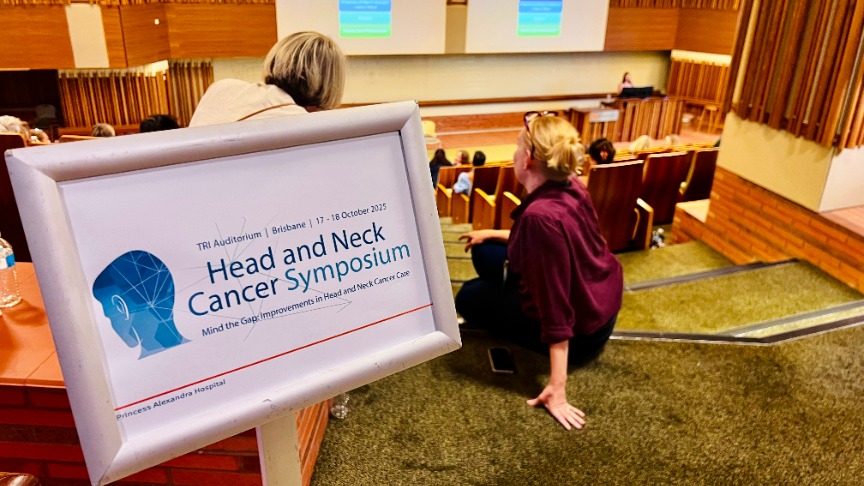
This was just one of the insights into staff wellbeing that filled an important gap in knowledge for attendees of the biannual Head and Neck Cancer Symposium hosted by PA Hospital on 17 and 18 October at TRI.
The truly multidisciplinary program hosted presentations, demonstrations, panel discussions and a shared passion for the management and support of people with head and neck cancer.
With a keen focus on staff wellbeing and person-centred care, sessions delved into the psychological challenges of a head and neck cancer diagnosis, the social and familial challenges for patients, and the supports in place.
The program delved further into the surgical perspectives of reconstruction with bioresorbable scaffolds, the toxicities of immunotherapy from the patient and the staff perspective, and exploring those gaps related to head and neck cancer for First Nation Australians.
The symposium was attended by representatives from across Australia with clinicians from a range of backgrounds including Dietitians, Speech Pathologists, Social Workers, Dentists, Nurses, Physiotherapists, OTs, ENT Surgeons, Radiation Oncologists, Plastic Surgeons, and Medical Oncologists were in attendance, as well as cancer survivors and their carers.
Tackling the topic of staff wellbeing head-on, the keynote address and wellbeing session with Advanced Clinician Social Worker, Wellbeing and Performance Coach and PhD Academic, Dr Liz Crowe provided unveiled insights into the ambiguous topic of staff wellbeing and the misnomers of burnout.
She said that one of the most damaging things for wellbeing is not having a challenge.
“Working in health for a living is not ‘normal’: the stress and sadness of health is part of our job and why all of us gravitated toward work that is about helping people. This is why a focus on personal wellness is necessary to continue doing deeply meaningful work.”
Some of her resounding reflections were that negative emotions are not all bad, sadness does not equal depression, and anxiety is an inbuilt response to motivate you to be safe.