
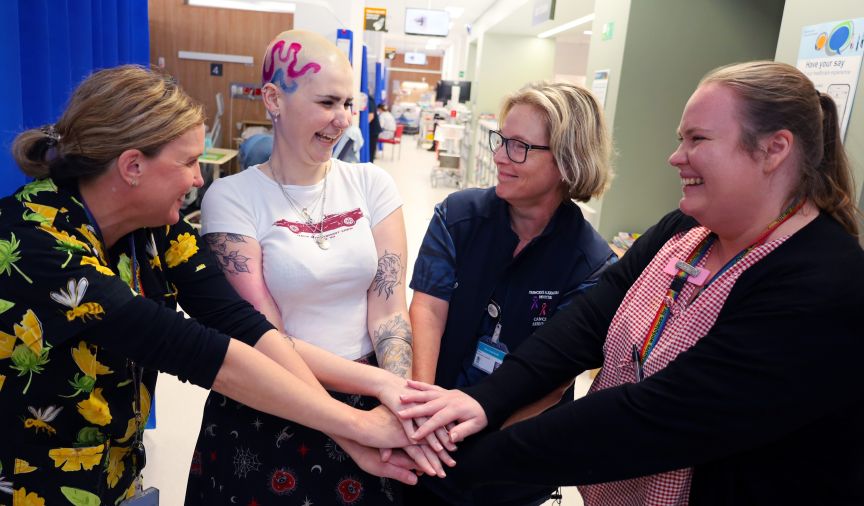
Kirsty’s life took an unexpected turn when she was just 16-years-old that would shape her future in ways few young people could imagine.
In April 2020, after months of searching for answers, she was diagnosed with a rare and aggressive cancer.
“I was first diagnosed with metastatic Ewing sarcoma at 16, after four unforgiving months of misdiagnosis and fighting with our local regional hospital in Gladstone,” said Kirsty.
Her treatment at Queensland Children’s Hospital included 12 months of chemotherapy and 30 days of radiation therapy to her right femur.
She entered remission in early 2021, before relapsing in 2023 aged 18 when a 121mm carcinoma was discovered beneath her right lung.
This next chapter of care brought Kirsty to Princess Alexandra Hospital, where she underwent six rounds of chemotherapy, radiation therapy, an autologous stem cell transplant, and a thoracotomy that removed the bottom lobe of her lung and one-third of her diaphragm.
“As a young oncology patient in the bracket of 15 years to 25, around 1300 of us are diagnosed annually in Australia and despite what people think, most of us are treated in adult hospital environments with so many travelling far and wide to receive our life saving treatment.”
Her treatment journey also included a lengthy recovery period, during which she required a gastrostomy tube for nutrition and additional inpatient care.
Despite the physical and emotional toll, Kirsty embraced life whenever remission allowed. She saw snow for the first time, moved into a new home, gained employment and planned a wedding and honeymoon.
Just weeks before her wedding, she began to experience familiar symptoms and was diagnosed with a tumour in her right hip and iliac.
She underwent another round of chemotherapy and five days of high-dose radiation therapy.
Kirsty now aged 22, has become a passionate advocate for young people receiving care in adult hospitals, while continuing to receive treatment herself.
For Youth Cancer Awareness Month, her story is a reminder of the unique needs of adolescents and young adults in hospital settings. This year’s theme is Too Young. Too Serious. Too Urgent.
“While I’m still currently fighting this horrid disease, I want to make sure there are standards set and clear outlines for youth healthcare and accessibility,” she said.
Kirsty is advocating for dedicated youth spaces, youth-specific resources, and stronger pathways that help young people feel connected and understood throughout their journey.
She acknowledges the important support already available via the PAH’s Youth Cancer team which consists of our Nurse Practitioner, Psychologist, Adolescent and Young Adult Medical Oncologist, Social Worker and Leisure Therapist, along with initiatives such as Sony Foundation’s You Can Stay program (accommodation assistance for regional patients), while also highlighting opportunities to further strengthen the inpatient experience for young adults receiving specialised treatment.
Senior Leisure Therapist Lyndal Gray said PAH is seeing a rising number of young people diagnosed, with sarcoma patients coming from all over Queensland and northern New South Wales for long periods of treatment.
“PAH is a Sarcoma Specialist Centre, so many young people are treated here for sarcoma which is a long and intensive treatment trajectory involving a specialist multidisciplinary team.
“Stories like Kirsty’s remind us to continually listen to young people so we can improve the way we deliver care that is aligned with the unique psychosocial and developmental needs of young people.”
Youth Cancer Awareness Month is Canteen's annual call to action: to fund better services, demand better policy, and make sure no young person faces cancer without the right support around them.
“Being young doesn't protect you from cancer. For around 1,300 Australians aged 15–25 who are diagnosed every year, it can feel like the health system wasn't built for us,” said Kirsty.
For more information go to www.canteen.org.au/youthcancer