
Inala’s Southern Queensland Centre of Excellence (CoE) is gaining attention for its culturally safe and community-led approach to chronic disease care—particularly diabetes.
At the heart of its work are passionate staff members like Nurse Navigator Rochelle Pitt, whose voice and lived experience are helping to improve health outcomes for Aboriginal and Torres Strait Islander peoples.
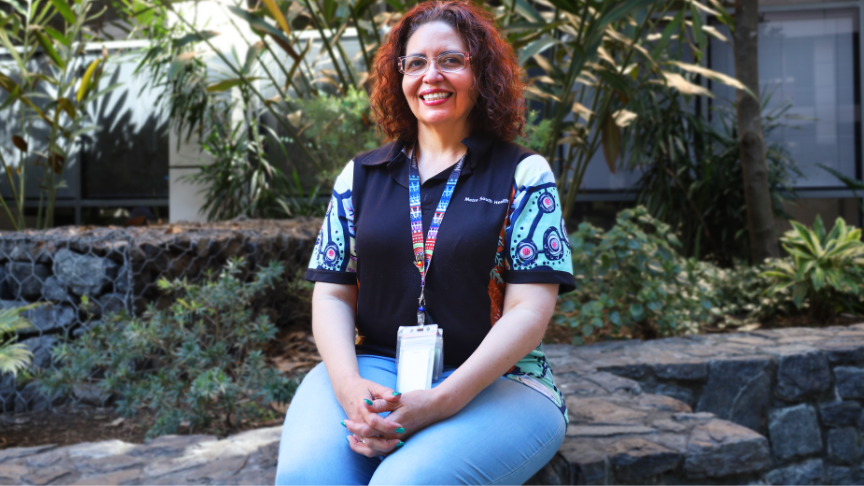
Rochelle Pitt, a proud Quandamooka, Meriam, Pitta Pitta and Wangkamana woman and health advocate, features in a recent video series produced by the National Diabetes Services Scheme (NDSS). Rochelle speaks about the importance of cultural safety and social determinants of health, like access to appropriate housing, in diabetes prevention and care.
“Our people are more at risk for chronic diseases like diabetes, and it’s so important that we address health holistically and through our ways of knowing, being and doing,” Rochelle said.
"It's important to put a human face on the research. To make our people the centre of our health initiatives. "
"Our community know who we are, and we can show them by taking part that this service is for them and they can get the help they need. "
The video features other familiar faces from the COE team, including Claudette (Sissy) Tyson, Aboriginal and Torres Strait Islander Health Worker Team Leader and Leah Shadford, Practice Manager.
“We wanted NDSS to come and shoot their video at COE with our staff because we know our community are comfortable here,” said Leah.
"We have the unique privilege to use our voices as health care staff and members of the community to highlight support services."
The centre supports patients with a variety of services and is designed to be more than just a clinic—it’s a culturally affirming space where people feel safe, respected, and heard.
With strong partnerships, including community-led initiatives like the Inala Community Jury for research governance, the centre puts Aboriginal and Torres Strait Islander voices at the forefront of health system design and decision-making.
“We don’t just address our client’s clinical needs, we provide education, and social, emotional and cultural support,” says Claudette (Sissy). “We understand that to manage the condition we need to care for the whole person.”
The NDSS video shines a light on this approach and the people behind it. By advocating for community needs, the team is helping to break down barriers and build bridges between health services and the people they serve.
Watch here: Aboriginal and Torres Strait Islander Peoples | NDSS