
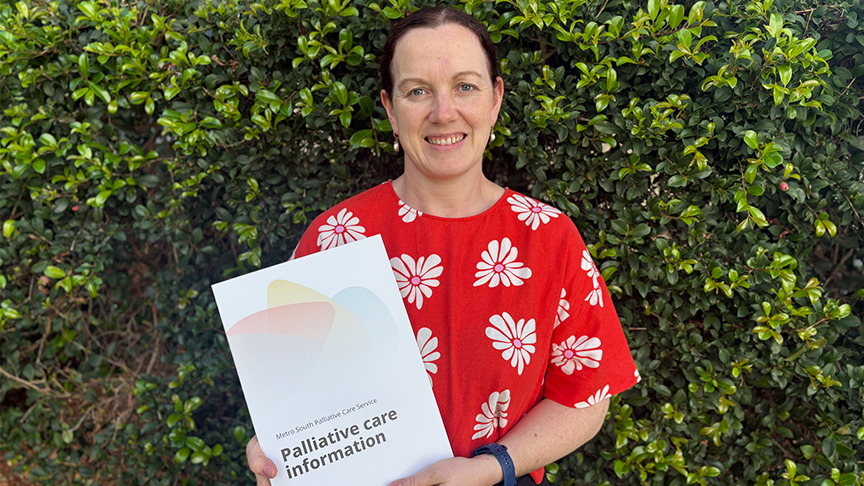
As Australia marks National Palliative Care Week (10-16 May 2026), Metro South Health staff are encouraging more open conversations about palliative care.
For Palliative Care CNC Lisa Gillen, the message is clear – greater awareness can help demystify a field of care that is often misunderstood.
“It is important to talk about palliative care to increase understanding and remove misconceptions or confusion people may have about what we do,” Lisa said.
“Palliative care is provided to patients who have been diagnosed with a life-limiting illness and aims to improve a person’s quality of life by focusing on comfort, dignity, and the relief of suffering.”
Lisa and the team help support patients to live well, their way, by placing the individual at the heart of every decision.
Rather than applying a one-size-fits-all model, clinicians work closely with patients and their families to understand what matters most in their daily lives.
“We begin by figuring out what is most important to them, whether that’s spending time with family, being in nature, or simply being free from pain or nausea,” Lisa explained.
“Each person’s priorities are different, and palliative care recognises and respects this.”
This personalised care often draws on a multidisciplinary team to address physical symptoms as well as emotional, social and spiritual needs.
Planning ahead is another key part of the process, with advance care planning helping patients to document their wishes for future health care.
“Patients are encouraged to talk with loved ones about what they would want as their illness progresses,” Lisa said.
“These discussions ensure families understand their wishes if they are unable to speak for themselves later.”
Formal documents such as advance health directives, enduring powers of attorney and statement of choice forms can then record these preferences, helping guide decision-making if patients become too unwell to communicate.
Families, too, are a central focus of palliative care, with support tailored to their individual needs during what is often a highly emotional time.
“One of the first steps is meeting families where they are at and building trust and rapport through open and honest communication.
“Some people want to chat over a cup of tea; others just want you to hold the space for them and be present – it’s about matching support to their needs.”
As patients approach the end of life, clear and compassionate communication becomes especially important, with families often seeking reassurance about what to expect and how best to support their loved one.
“Simple acts like playing their favourite music, sharing memories, or bringing in photos and blankets can help create a sense of peace and connection during the dying process,” Lisa added.
“These small but meaningful acts can help their loved one feel at peace by connecting back to what is most important to them as a person, and as a family.”
Referrals to palliative care can come from hospital teams or general practitioners caring for patients with life-limiting illnesses, with services provided in both hospital and community settings.
Once a referral is received, the palliative care team works with patients and families to arrange an initial review and discuss the next steps. Care may begin in hospital or at home.
The Metro South Palliative Care Service has recently refreshed its consumer information and bereavement resources to better support those navigating palliative care.
Tailored information packs are also provided to patients and families, offering practical guidance and reassurance.
In line with National Palliative Care Week, Lisa hopes that by improving understanding and encouraging open discussion, more people will feel informed, supported and less fearful of what palliative care involves.