
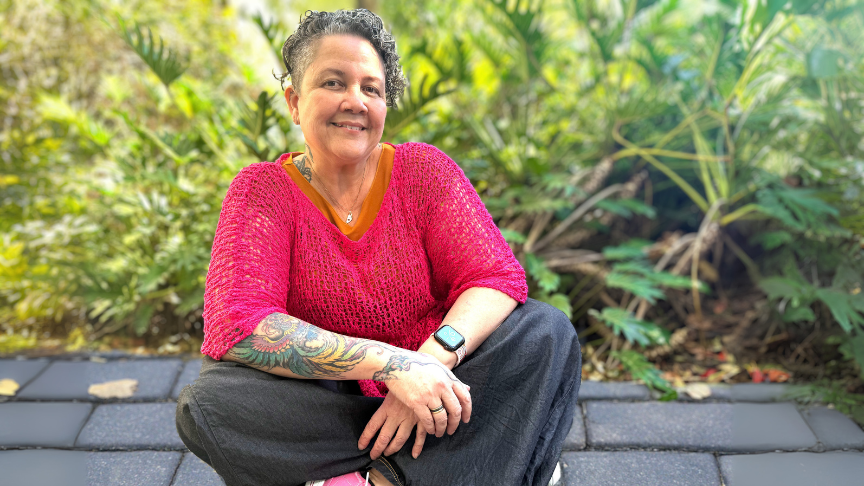
Metro South Health has welcomed a new voice for young people in the healthcare system with the newly appointed Senior Engagement Advisor - Youth Trisha Schröder.
Starting mid-May, Trisha has hit the ground running, drawing on her 15 years of local government experience in a rural Queensland community and her 7 years at West Moreton Health, where her passion for youth engagement truly took hold.
Initially, Trisha admits she was daunted by the idea of working with teens. “Even though I had kids of my own, I was petrified. I told my executive director, ‘There’s no way, I’m scared of teenagers!’” said Trisha.
“But it ended up being the most amazing experience of my career.”
When a similar opportunity arose at Metro South Health, Trisha said, “It pulled at my heartstrings. I knew I had to be part of it.”
Now, she’s spearheading a youth advisory program that includes establishing a new Youth Advisory Council as well as recruiting youth-identified Project Support Officers to keep young voices central to the consumer partnering team.
One of the most significant challenges Trisha sees is the gap that many young people fall into when transitioning from paediatric to adult care.
“We’re meant to provide seamless care as people move from one system to another, but we’ve never really asked young people what that should look like,” she said.
“Some services start transitioning at 14, others at 16 or 18. Clinicians don’t always know what to do. I’ve heard them say, ‘They’re too old for the kids’ ward, but too young for the adult ward.’”
Trisha believes clinicians can be just as unsure as young people about how to connect across age groups.
“In the same way I was once afraid of working with that age group, some of our clinicians don’t know how to talk to them either and young people feel that.”
She says young people with chronic conditions especially feel ignored or misunderstood.
“They’ve often managed their health for years. They’re knowledgeable. But when they speak up, they feel dismissed just because they’re young.”
She also notes that youth are often more holistic in how they think about health. “They don’t talk about ‘social determinants of health’, but that’s exactly what they’re referring to. They say things like, ‘I can’t go to the doctor, I can’t afford the bus fare,’ or ‘If I have to choose between work and a check-up, I’ll pick work because I need to feed myself and pay the rent.’”
“We forget that people aged 15 to 25 are navigating massive life milestones; moving out, studying, working, dealing with relationships and on top of that, they might have complex health needs,” she said.
“We’ve also got a multicultural youth population, and sometimes cultural beliefs around health make things really complicated for young people especially.”
Looking ahead, Trisha is excited to co-design an annual youth forum and embed young voices across the hospital and health service. More than anything, she wants youth engagement to become “business as usual.”
“This is the one diverse group that we currently don’t have at the table,” she said.
“My hope is that we reach a point where having young people involved in planning, decision-making and informing service improvement isn’t a novelty, it’s just how we operate.”
And while she acknowledges there’s still work to do, she’s confident in the direction Metro South is heading.
“Everyone I’ve spoken to is genuinely committed to doing this well. That gives me a lot of hope, I’m so excited!”
“The health system should grow with young people, not outgrow them.”