
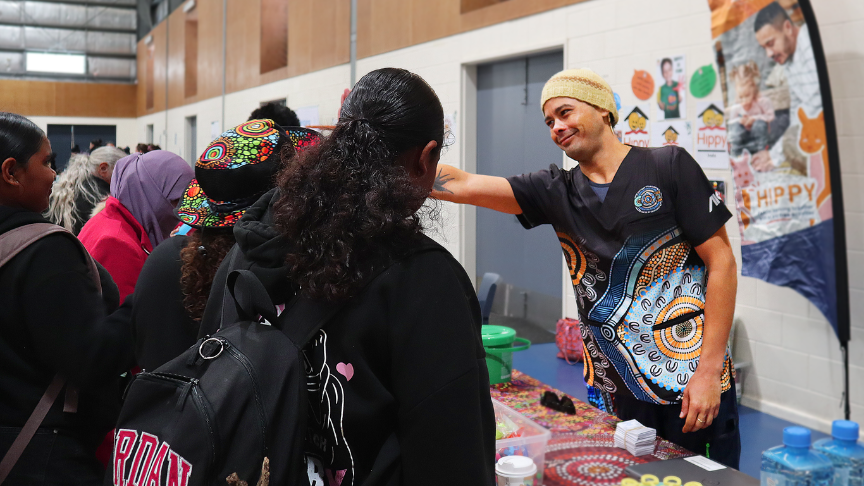
The Southern Queensland Centre of Excellence Child and Adolescent Wellbeing Service (CAWS) are leading important work to support the next generation through culturally informed mental health care.
Joshua Sells, Aboriginal and Torres Strait Islander Health Worker, is part of the multidisciplinary team which also includes a psychiatric consultant, senior child specialist psychologist, clinical nurse, psychiatric registrar, and team leader.
Josh joined the team almost a year ago, bringing with him 12 years of valuable experience from his work in the Northern Territory. To add to his impressive CV, Josh was recently gazetted as a panel member for the Aboriginal and Torres Strait Islander Health Practitioner Panel of Assessors.
“I love the work we do and engaging with our young people,” Josh said.
The service is still in its development, but already it is making a significant difference in the community.
“The standard Child and Youth Mental Health model of care doesn’t always meet the needs of First Nations young people and their families, so we are developing a culturally safe and methodologically informed model of care specific for this service,” Josh said.
“It is essential to create this culturally therapeutic space for our community.”
CAWS also employ a Senior Psychiatrist, Senior Phycologist, Social Worker, Clinical Nurse Specialist, Occupational Therapist, Psychiatrist registrar. CAWS model was developed from a traditional MDT CYMHS model of care funded by Qld Health to address the apparent disparities/gaps in First Nations youth mental health outcomes, compared to non-first nations youth stats.
The service focuses on educating young people and families on functional relationship dynamics, communication skills and coping methods. Much of the work centres on helping mob understand intergenerational trauma and its effects on parenting skills and family dynamics.
For young people, this support can be as simple but powerful as a personal check-in. Creating safe spaces where they feel comfortable helps them share their struggles in ways they may not have been taught before.
By building these skills, young people become more confident in expressing themselves, which in turn strengthens their relationships, connection to community, and overall wellbeing.
Parents are also supported to understand the deep and ongoing impact of their relationships with their children, even from pregnancy. The team works with parents to nurture their bond with their babies and children, helping to break cycles of disconnection and create stronger family foundations for the future.
“I continue what I'm doing because I think it's what would make my ancestors and Elders proud,” Josh said.
“That's what I want to achieve - to try and do the right thing to help young people have a better life sooner.”
By honouring cultural knowledge, creating safe spaces, and walking with families to understand their needs, and collaborating with the Southern Queensland Centre of Excellence to appropriately inform Child and Adolescent Wellbeing Service are helping young people and their families build stronger, healthier futures.