
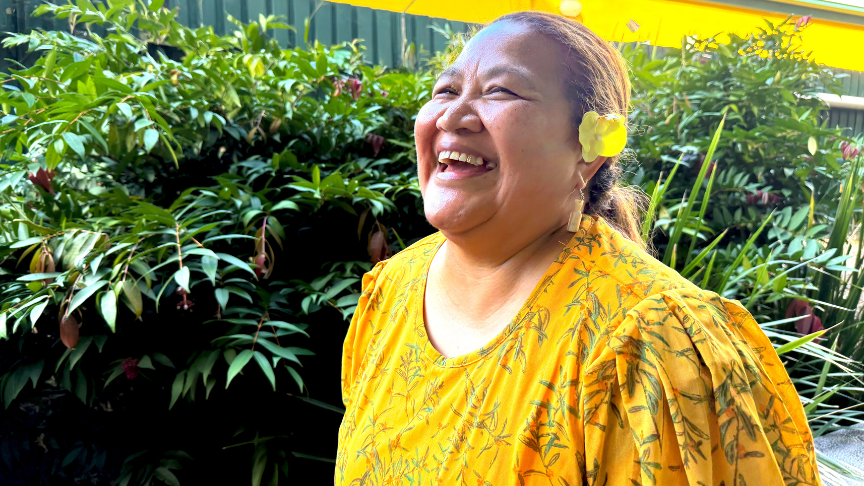
Clinical Nurse Consultant for Addiction and Mental Health Services Fololini “Lini” Paasi, is celebrating Multicultural Queensland Month, by sharing her own powerful story of cultural healing in mental health care and begins close to home.
It began with a man in his 40s, a Tongan father of two living in rural Queensland, who had been referred to Queensland Transcultural Mental Health Centre. Diagnosed with schizophrenia and on a treatment authority order, he was struggling. He was estranged from his family, grieving the recent death of his mother, and turning to alcohol to cope. His marriage was impacted, his job at risk, and his treatment plan wasn’t working. Something was missing.
That “something” was cultural understanding.
As a bilingual Tongan-speaking nurse, Lini was called in to assist with a cultural mental health assessment. In their first meeting he shared his story, steeped in cultural expectation and identity.
Lini described how as the eldest son in a traditional Tongan family, he was expected to lead and manage his mother’s funeral. But estrangement from his family and a lack of cultural resources left him feeling lost. His daughters, who by custom should have worn traditional dress to the funeral, instead arrived in jeans and t-shirts something that deeply shamed and grieved him.
"He was grieving not only the death of his mother but the loss of his cultural identity and the role he should have played," Lini said.
His cultural expressions of grief were misunderstood, sometimes mistaken for delusions by clinicians unfamiliar with Tongan customs.
With Lini’s advocacy, things began to change. She explained his story and the cultural significance of his behaviour to the treating team. They adjusted his medication, which had been impacting his marriage. He was eventually released from the treatment authority. Most importantly, he began to re-engage with his family, his culture, and himself.
He asked Lini to help him teach his daughters traditional Tongan recipes. Together, they wrote them out and it became a healing activity for the whole family.
“He was so grateful,” she said.
“By the time we closed his case, he was back at work and reconnecting with his children through food and tradition.”
Now working in Metro South Health’s Child and Youth Mental Health Services, Lini has spent nearly 18 years with Queensland Health. She originally trained in the Pacific Islands and later retrained as a nurse in New Zealand before moving to Australia. Her experience working in remote island communities shaped her approach to holistic and culturally safe care.
She believes strongly that bilingual and bicultural clinicians are an underused resource. “Without this kind of support, he may have lost everything; his family, his job, even his future,” she said.
“It’s so important that these roles are recognised and made accessible across Queensland Health.”
Her message is clear: culture matters in care. “Every culture has its own story, its own beliefs about health. If we only listen through a biomedical lens, we miss what truly matters to our patients.”
She hopes her story encourages other culturally diverse clinicians across Queensland to put their hands up as bilingual workers and reminds everyone that healing doesn’t just come from medicine, but from being seen, heard, and understood.