
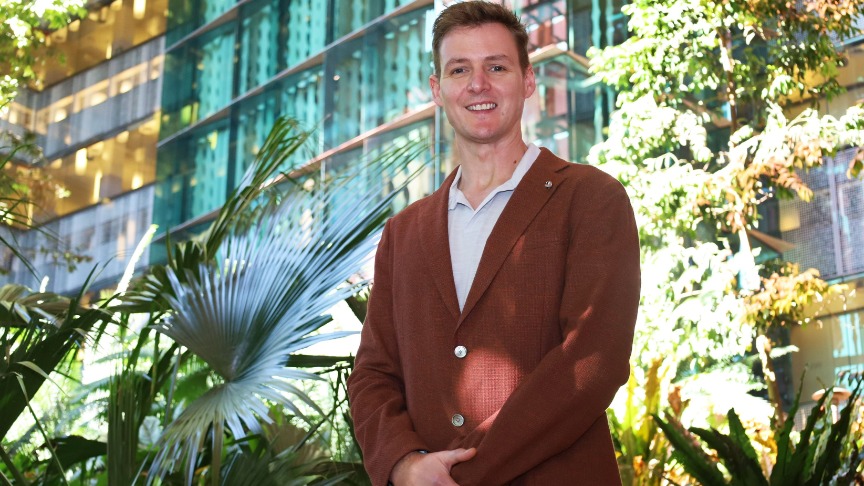
A first of its kind clinical trial designed by MSAHMS Research Officer Mike Trott has taken top honours at the Queensland Health Research Excellence Showcase, winning the prize for best poster and pitch session presentation.
The Showcase, a competitive event that featured just 20 finalists selected from dozens of initial applicants, awarded the randomised control trial designed to explore the use of semaglutide (commonly known by brand names Ozempic and Wegovy) in people living with schizophrenia.
“We're the first in the world to show this,” said Mike.
“This could change prescribing practices in psychiatry and ultimately help people live longer, healthier lives.”
The study focused on the use of semaglutide, traditionally used for type 2 diabetes and weight loss, in people taking clozapine, a powerful antipsychotic often used as a last resort for treatment-resistant schizophrenia. While effective for managing psychotic symptoms, clozapine is known for severe side effects, especially weight gain that can lead to cardiovascular disease and significantly reduce life expectancy.
“People on clozapine can die up to 20 years earlier because of the side effects. That’s what we’re trying to change,” Mike explained.
“This study was designed to see if we could reduce that risk, without compromising their psychiatric treatment.”
The trial found that participants lost an average of 13 per cent of their body weight in just 36 weeks, with no adverse impacts on their psychotic symptoms or clozapine blood levels. The effect size was so significant that the trial was stopped early to avoid keeping further participants on placebo.
The trial was recently published in The Lancet Psychiatry, one of the world’s leading journals in the field.
“This could change prescribing practices for people with schizophrenia,” said Mike
“Until now, weight-loss drugs haven’t been approved for this group because they were excluded from all the initial clinical trials. We’ve now shown they can offer safe and significant benefits.”
The research was a collaborative effort led by Professor Dan Siskind, a consultant psychiatrist specialising in treatment-resistant schizophrenia, with clinical trial management by Andrea Baker and the Queensland Centre for Mental Health Research team. The study was supported by the Metro South Health Research Support Scheme, the Medical Research Future Fund, and the National Health and Medical Research Council.
Mike said the research priorities were guided directly by people living with schizophrenia.
“When we asked them what mattered most, it wasn’t reducing psychotic symptoms, it was managing the side effects of their medication. That’s what inspired this trial.”
Mike is now preparing for the next stage of research, including trials of a newer, potentially more powerful weight loss drug, tirzepatide, and investigating whether early intervention with semaglutide could prevent weight gain in the first place. Oral versions of these medications are also on the horizon, potentially making treatment more accessible.
From international collaboration to national policy change, the impact of this research is just beginning.
“We're pushing to have semaglutide formally approved for weight loss in people with schizophrenia,”
“If we can reduce the risks, improve quality of life, and extend lifespans for these patients, then that’s real change.”