
A new specialist service at Metro South is strengthening care for people with intellectual and developmental disabilities by equipping clinicians with expert guidance to better recognise and respond to diverse individual needs.
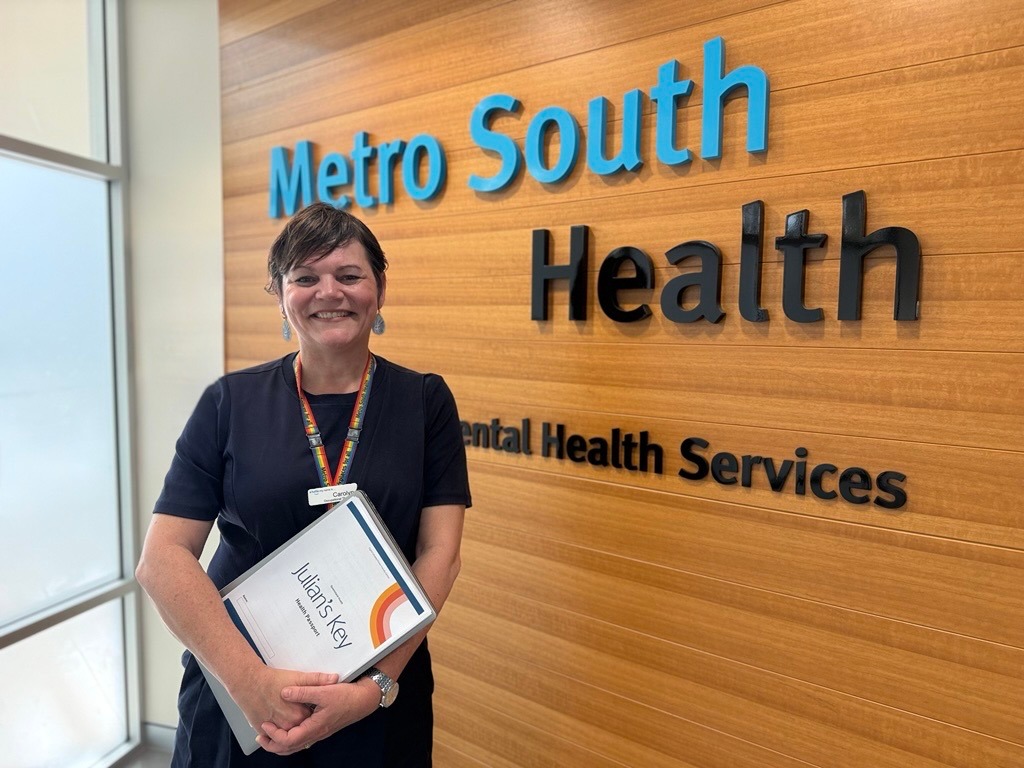
Led by Carolyn Wilkinson, the Better Care Together-funded Mental Health and Intellectual and Developmental Disability (MHIDD) service within Metro South Addiction and Mental Health Services (MSAMHS), has been building workforce capability within the catchment since December.
The service provides specialised mental health consultation for consumers with intellectual and neurodevelopmental disabilities on referral, as well as secondary consultation, clinical advice and workforce education through targeted education, including “lunch and learn” sessions and modules on neurodivergence, disability language and reasonable adjustments in clinical care.
Carolyn said improving outcomes for consumers often starts with a simple but critical shift: seeing the patient’s experience from their perspective.
“Neuroaffirming care is about recognising that people experience the world differently and adapting how we communicate and deliver care to meet those needs,” she said.
“Small changes can have a significant impact on a patient’s experience and outcomes. In some cases, it might just mean adjusting the lighting or providing a quieter treatment space."
Carolyn said one of the biggest risks in clinical settings is diagnostic overshadowing, where symptoms are incorrectly attributed to a person’s disability rather than an underlying medical issue.
“It’s always critical to ask: what is this person’s baseline, and what might be different today? It’s important not to assume.”
To support more consistent and individualised care, MHIDD promotes tools such as the Health Passport Chart Summary available through Julian’s Key that captures a consumer’s communication needs, preferences and supports.
The service is also helping clinicians better understand the broader health profile of neurodivergent consumers, including differences in pain expression, communication and co-occurring conditions.
“Some consumers may not express pain in a typical way, or may have difficulty identifying internal sensations like hunger or fatigue,” Carolyn said. “If we’re not aware of that as clinicians, it can directly affect how we assess and respond.”
Carolyn said building workforce capability is key to improving equity across the health system.
“If you work in health, you’re really making a commitment to supporting people at their most vulnerable,” she said.
“It’s important we take responsibility for ensuring our communication, environments and care approaches are inclusive for consumers of all abilities.”