
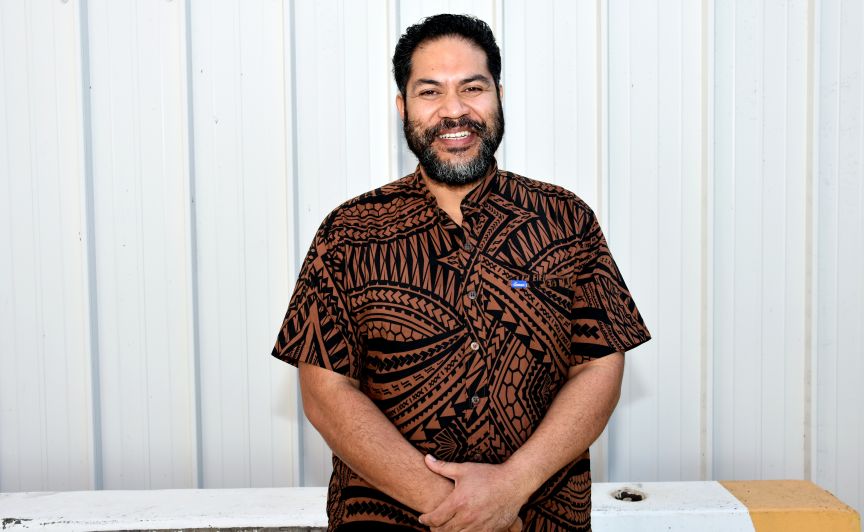
For Māori and Pacific Islander Hospital Liaison Officer Daniel Tafao, culturally safe healthcare is about making sure every patient feels respected, understood and supported throughout their healthcare journey.
In his liaison role, Daniel works closely with Māori and Pacific Islander patients, families and healthcare teams to support cultural understanding and ensure patients receive the care and support they need.
"I help bridge the sacred space between patients, families and the healthcare team," he said.
Daniel said his role involved providing cultural, spiritual and emotional support to help patients and families navigate the hospital system and understand their healthcare options.
“Providing care that respects culture is an important part of improving health outcomes, particularly for communities that have experienced health inequities,” he said.
"When people feel respected and understood, they are more confident accessing healthcare services and taking an active role in their care.”
Daniel’s passion for healthcare comes from a desire to support people and communities to prioritise their health and wellbeing.
As a proud Samoan, he brings both professional knowledge and personal experience to his role, helping him build trust and connect with patients and families during what can often be a challenging time.
"I can relate to patients because I understand their experiences," he said.
"Values such as faith, family, respect, resilience and working together are important in many of our communities, and recognising those values can make a real difference."
Daniel said he is guided by the Samoan proverb E fofo e le alamea le alamea, which means the solution to challenges affecting a community can often be found within that same community.
Looking ahead, he hopes to see greater awareness of health services, improved health literacy and more cultural competency training for healthcare workers to help create safe and welcoming environments for all patients.
During Men's Health Week, Daniel is encouraging Māori and Pacific Islander men to make their health a priority, not only for themselves but for their families as well.
"If we want our children to be healthy, we must understand that we are the example," he said.
"If you service your car regularly, why wouldn't you do the same for yourself?
“Small changes can have a big impact over time. Stay active, eat well, spend time with loved ones and seek support when you need it."
Through his work, he helps ensure Māori and Pacific Islander patients and families feel supported, understood and connected throughout their healthcare journey.