
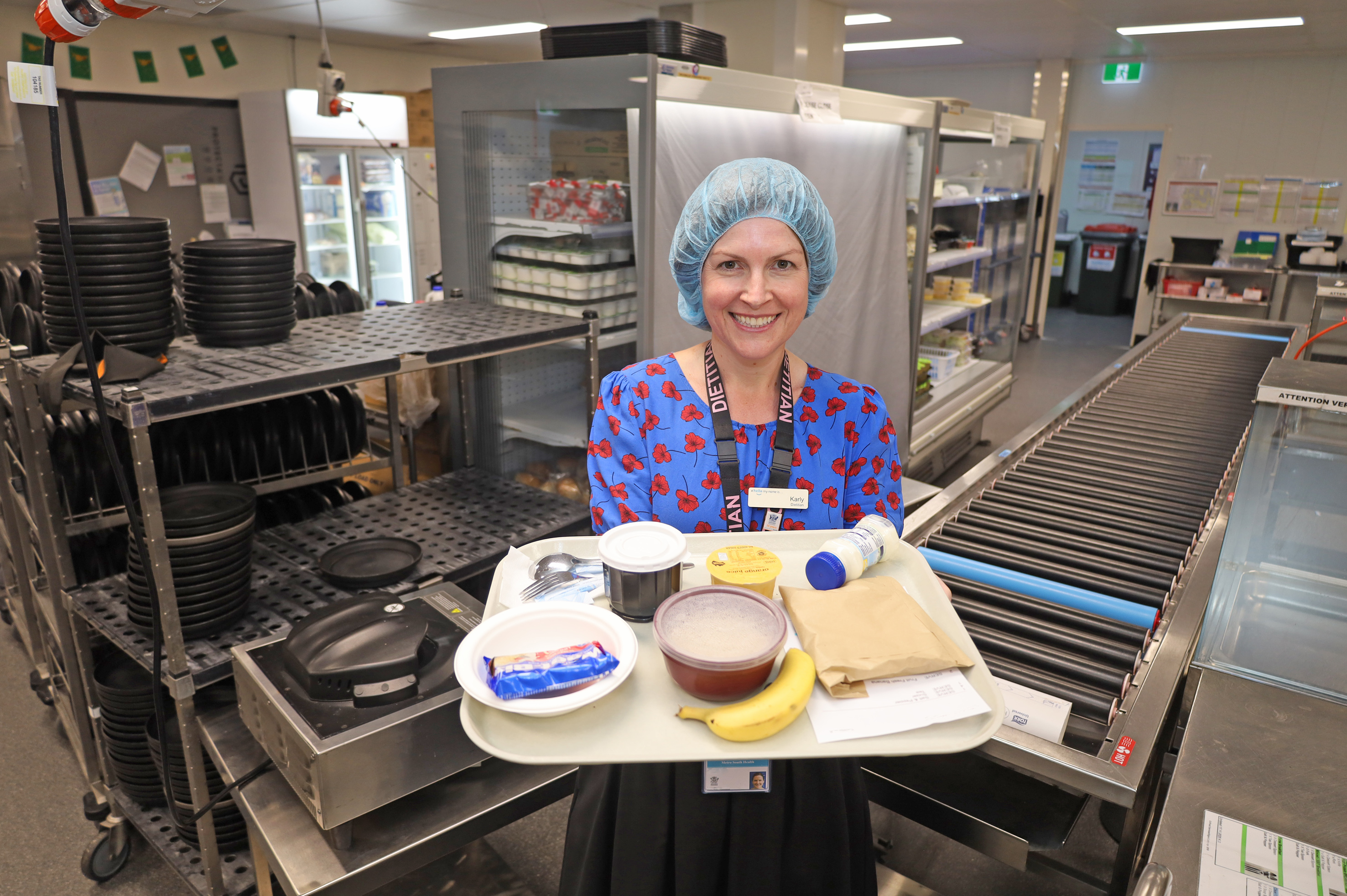
QEII’s soon-to-be-launched room service on demand project is set to deliver a key benefit - reducing food waste.
QEII Food Service Dietitian Anita Mohanlal and Project Lead Karly Miller say the initiative aligns strongly with the MSH Environmental Sustainability Plan and global efforts to improve food security and environmental health.
Each year, around 1 billion tonnes of edible food is wasted globally - nearly one-fifth of all food available to consumers. According to the 2021 National Food Waste Strategy Feasibility Study, Australia wastes around 7.6 million tonnes of food each year, equating to more than 300 kilograms per person.
“At QEII, we know a large portion of food waste is driven by traditional hospital food models. Moving to room service on demand, QEII fundamentally changes that,” Anita said
The current model generates waste due to high volumes of non-select meals and delays between ordering and delivery, leading to high levels of plate waste of around 40 per cent.
When room service on demand comes online, hungry patients will be able to order meals using their phone, the CBORD Patient App or a dedicated onsite contact centre. Meals will be prepared and assembled to order, rather than produced in bulk and held in advance.
“This shift means we are no longer producing meals that may not be eaten,” Karly said.
QEII’s nutrition team will be able to monitor missed meals in real time and intervene earlier, ensuring patients receive appropriate nutrition while avoiding repeated preparation of uneaten meals.
While it’s predicted to reduce food waste by up to 50 per cent, the true impact will only be known once the system goes live. Karly and Anita said QEII’s multidisciplinary room service team will monitor and analyse inputs and outputs throughout the rollout to evaluate its success.
“We want to make this system great for patients and the planet, so we’ll be recording data regularly to address any teething issues and refine the system to enhance the patient experience and reduce waste as much as possible.”