
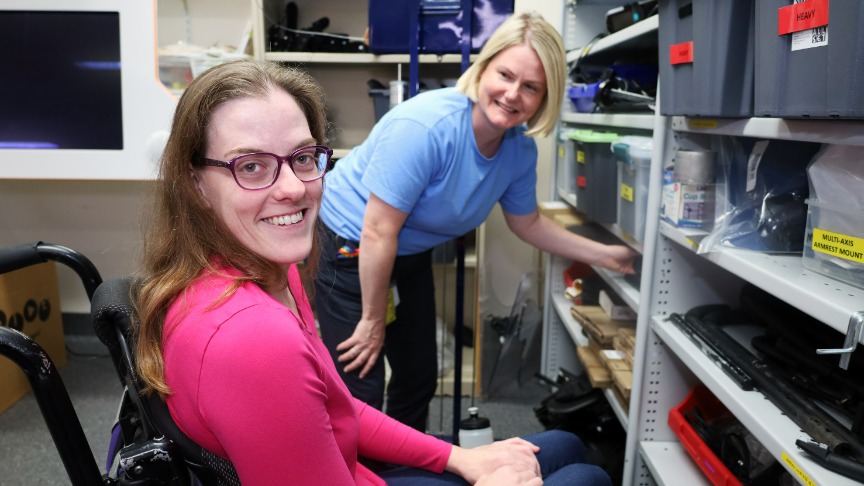
While most falls affect persons over 65, falls can occur at any age making falls prevention at every stage of the patient journey an integral part of care at PA Hospital.
Occupational Therapist, Kathryn Marshall is part of a team of researchers and clinicians investigating the impact of falls within the system in both the hospital and community setting. The research is being conducted as part of Kathryn’s PhD studies with The University of Queensland.
“I have been an Occupational Therapist for a long time working a variety of caseloads and, falls prevention has been a big part of all of them.”
Working within the team, Occupational Therapists positively influence falls prevention and management by providing education to patients about home hazards and reviewing behaviours which could be a risk.
“A fall can have negative outcomes including physical or psychosocial consequences for the person, so part of our focus is on preventing a fall before it happens.”
“We work with patients, particularly those with a disability, to understand their lived experience and daily life in order to formulate effective fall prevention strategies,” she said.
Kathryn’s research over a number of years focuses on the experience of people with a spinal cord injury as both an inpatient and within the community.
“Due to the motor and sensory changes experienced by persons with a spinal cord injury, they are at an increased risk of falls.” she said.
Kathryn’s research includes a retrospective audit, collecting data from incident reports and medical records of patients over a five-year period as well as the lived experience of these patients in the 6-12 months after discharge home.
“The research aimed to understand the true impacts of falls during a hospital admission for people with spinal cord injury and to gain further information on what these falls mean for patients alongside the effect of prevention strategies on their daily life.”
The most recent co-design study looks at ways to enhance falls practice on a unit managing spinal injuries.
“Patients want to learn from their own lived experience through practical and personalised education. In addition to this they highly value the experience of others who can share their stories.”
An important finding of the research was that patients use the strategies learned in the inpatient setting to reduce falls post-discharge which is a key driver of the development of a co-design process within the unit to enhance confidence in falls practice.
“The next stage will see staff and patients working in active partnership toward service improvement,” she said of reducing falls risks and consequences. “We hope to integrate the learning we have to explore how best this can be delivered in the inpatient setting.
The Occupational Therapy department has extended the research on inpatient falls into the Brain Injuries Unit with an audit of the consequences of a fall during the inpatient admission.