
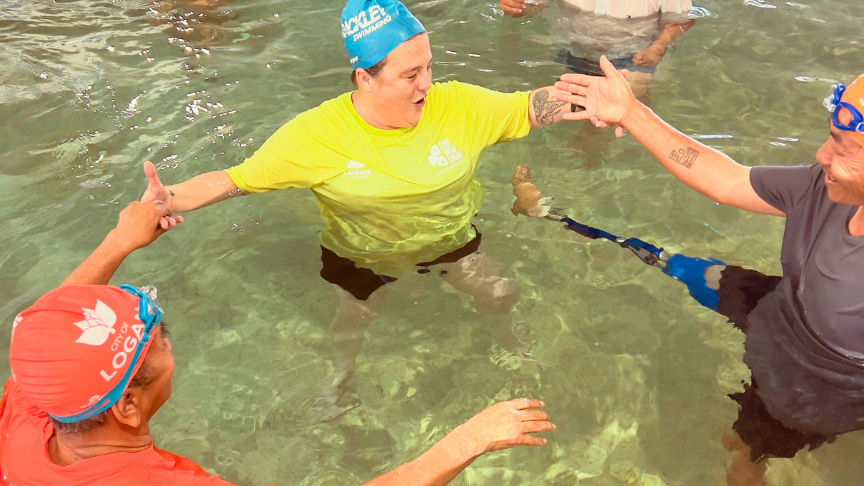
 Members of the Aqua English Program
When Marseem first arrived in Queensland, the pool was the last place she thought she’d belong. She had never learned to swim, and the thought of stepping into the water filled her with fear.
“I just didn’t think it was for me,” she said. “Swimming wasn’t part of my life growing up. I never imagined I could do it – let alone teach it.”
That began to change when she enrolled in the Aqua English program, a unique initiative that combines swimming lessons with English language support for newly arrived migrants, refugees, and carers of people with disability.
At first, the lessons were about survival – floating, breathing, finding calm in the water. But step by step, Marseem grew stronger. Her teacher encouraged her to keep going, and slowly, a spark ignited.
“One day, I realised: I can do this. Not just for me, but for others. I wanted to help my community learn too.”
Now, Marseem is a swimming teacher. She stands at the pool’s edge, guiding adults and children through the same first steps she once took, often in Kurdish or Arabic so her students feel at ease.
“When they see me in the water – someone who started just like them – they believe they can do it too. That makes all the difference.”
For Marseem, the ripple effect has extended to her family. Her brother, who lives with a disability, was once terrified of the pool.
“At first, he clung to me, shaking. He was so anxious. But little by little, he relaxed. Now he swims with his carer and tells me, ‘No, I’ll go myself.’ It makes me so proud. He feels free.”
The transformation has been about more than swimming. It has given her brother independence, dignity, and a new way to connect with the community. For Marseem, it has brought confidence and purpose.
“Swimming is freedom,” she said. “It gave me a new career, it gave my brother joy, and it gave my family peace of mind.”
Since 2003, Aqua English has helped hundreds of people like Marseem find their place in the water. But for her, the story is simple:
“If you live in Australia, you need to swim. It’s not just about safety. It’s about belonging.”