
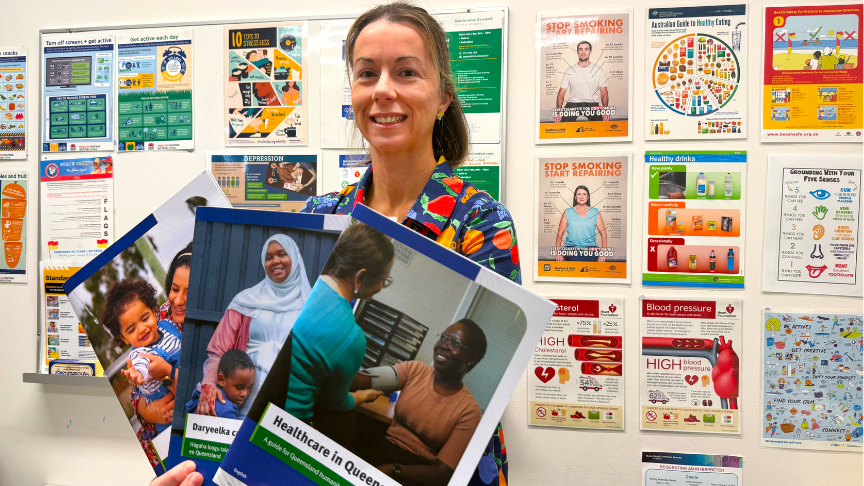
 Naomi Drew Registered Nurse Refugee Health
After two decades in nursing, spanning from neonatal care to adult emergency, Registered Nurse Naomi Drew says she has finally “come home” after landing her dream role in Refugee Health.
“I’ve had a really varied career,” she explained. “But this is where I feel like I truly belong. It brings together my public health background and nursing skills in a way that makes a real difference.” said Naomi.
Now working as a Refugee Health Registered Nurse, she is part of a close-knit, nurse-led team that focuses on preventative care, health promotion, and health literacy for some of the community’s most vulnerable new arrivals.
For many of her clients, the concept of preventative healthcare is unfamiliar.
“In refugee camps, healthcare is often about survival. You go to hospital when you’re very sick, not to the GP to stop yourself from getting sick,” she said.
“We spend a lot of time teaching people about our healthcare system, the importance of vaccinations, and how to manage chronic conditions like diabetes or high blood pressure.”
Health literacy sessions are central to her role. Families are introduced to the Australian health system, learn about healthy lifestyles, and receive practical resources such as reusable lunchboxes and drink bottles.
“It’s not just about physical health, we’re also helping families save money and build healthier habits across generations,” she said.
Her team works closely with interpreters to ensure every client receives care in their own language.
“We can’t expect people to engage in their healthcare if they don’t understand it,”
“It’s a human right to have health explained in a language you can understand.”
The diversity of clients means no two days are alike. From families from Rohingya to refugees from Congo, each group brings unique challenges and strengths.
“It’s never the same week twice, and that’s what I love about it,” she said.
“Something as simple as a follow-up call can change everything. Making sure someone doesn’t miss a specialist appointment or understands how to take their medication. These small moments add up to better health outcomes.”
Looking back, she says her decision to study a Master of Public Health before COVID-19 was pivotal.
“I was at a crossroads and knew I wanted to focus on prevention, not just treatment. Working in community care has given me not only incredible job satisfaction but also work-life balance. I get to make a difference while working family-friendly hours.”
She hopes more nurses will consider careers in community health.
“People don’t always realise how rewarding this work is. Every day, you see the impact you’re making not just for one person, but for families and future generations.”