
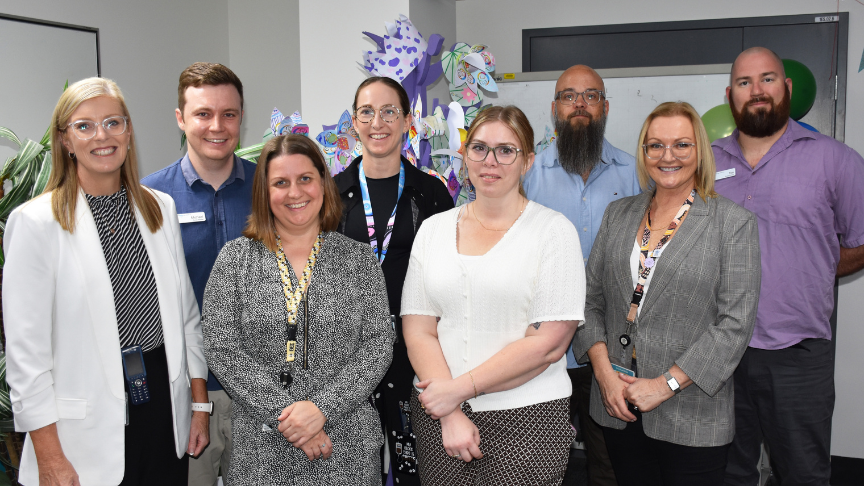
A panel of experts at Logan Hospital’s annual Child Protection Week Workshop has explored best practice and the barriers to supporting young people at risk.
Bringing together representatives from health, police and child safety, the workshop focused on how services could work together to better support vulnerable young people and their families.
Held under the theme Every Adolescent, Every Identity, Every Right to Safety, the workshop provided an opportunity for local services to share their experiences and explore ways to improve support for young people who may have repeated contact with different agencies.
A key focus of the panel discussion was understanding the barriers that could make it difficult for vulnerable young people to engage with services, as well as what could help build trust and create supportive pathways.
The panel also explored changes in the number and circumstances of young people coming to the attention of services over the past five years, and what these trends could mean for future service responses.
Child Protection Unit social worker Emily Reynolds said in addition to caring for young people experiencing complex trauma and mental health challenges, her team had noticed an increase in young people at risk of harm outside the home, where seeking acceptance could lead to grooming and associated risk-taking behaviour.
“Contextual safeguarding is an issue for all agencies working with at-risk young people to be aware of, as well as the community,” she said. “Safeguarding young people may reach across many domains, from the local supermarket, park, hospital, schools and community organisations. Keeping young people safe requires early identification and a high level of collaborative working between agencies.”
Emily said staff and the community could help keep young people safe by keeping an eye out for telltale signs.
“Be on the lookout for changes in the behaviour or appearance of young people you know, particularly if they become withdrawn, start spending excessive amounts of time on social media or communicating with unknown adults online, or suddenly have new items or wealth they can’t explain.
“Other signs can include new or unusually close friendships, unexplained physical injuries or frequent visits to the emergency department. If something doesn’t seem right, it’s important that you don’t ignore it.”
The annual workshop reinforced the importance of collaboration between services and ensuring young people with lived experience have a voice in conversations about the support they receive.