
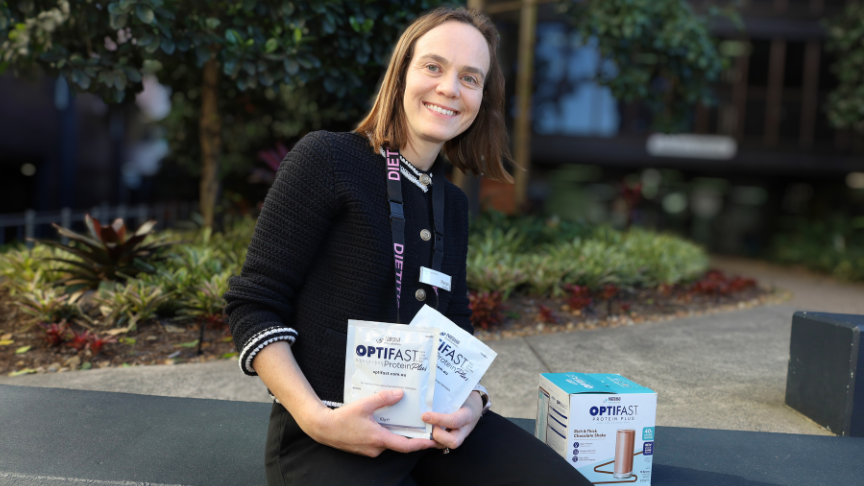
A Queensland-based clinical trial is showing promising signs of a safe, effective new weight loss approach for people living with kidney disease. Senior Kidney Dietitian Margie Conley was one of only 20 researchers invited to present at the Queensland Health Research Excellence Showcase, where she shared findings from a Metro South and Metro North study exploring intensive weight loss for people with kidney disease and obesity.
The study, funded by Kidney Health Australia, looked at whether a low-energy diet combining meal replacements and whole foods could help people living with chronic kidney disease lose significant weight safely, and whether that weight loss could in turn slow disease progression and improve quality of life.
“This research has been about helping people with kidney disease reclaim their health and their lives,” said Margie.
“We wanted to explore if weight loss could not only improve clinical outcomes, but also help people return to the things they love like fishing, camping, or playing with grandkids.”
Over six months, 49 participants from the Princess Alexandra, Redland, and Royal Brisbane Hospitals followed a low-energy diet using a mix of meal replacements and pre-prepared meals. They received individualised support from dietitians and exercise specialists throughout the trial.
“We were thrilled with the results with nearly half of our participant losing over 10 kilos, which is more than most traditional lifestyle interventions have managed.”
Many also showed improvements in waist circumference, blood pressure and indicators of kidney health.
Participants also reported a boost in their energy, mobility and mental wellbeing, with several sharing how the program had helped them return to hobbies, work, or simply enjoy everyday activities again.
“One participant told us that being invited into the study changed his life,”
“He had just asked his GP about using meal replacements for weight loss but due to lack of research in the space was discouraged from use. He was devastated, then a month later, we called.”
“There’s often a lot of stigma around weight, especially for people with chronic illness,”
“But this study shows that with the right support, people can succeed, and that weight loss can be a pathway to not just better health, but a better life.”
Excess weight can delay or even prevent access to life-saving transplants, but new statewide services, including a dedicated metabolic and bariatric pathway for kidney patients are helping to remove that barrier. Margie is now working with her team to expand the research into a larger effectiveness trial, potentially combining dietary interventions with newer weight-loss medications like GLP-1 receptor agonists.
“My hope is that we can delay the need for dialysis and improve quality of life,” she said.
“I want to see people with kidney disease living well, not just surviving.”