
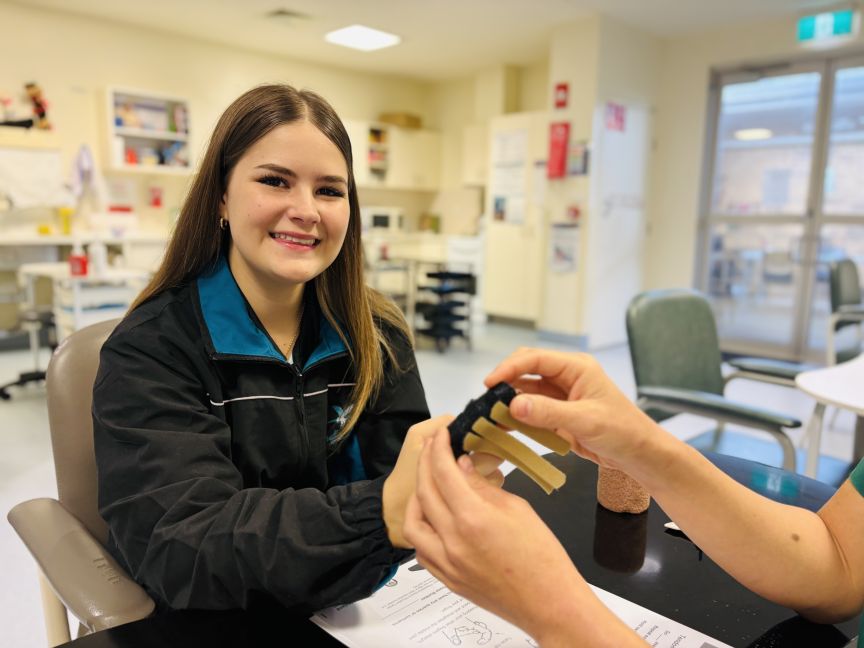
A new Bayside Health Service study is investigating whether people with a common finger injury can safely return to sport sooner than currently recommended.
Advanced Occupational Therapist Emma Thomsen is leading the research, which will follow adults and children treated for a volar plate injury, a common finger injury.
Local student Keeley Reyment, who jarred her finger playing netball, said she was keen to get back to sport as soon as possible.
“I didn’t think much of it (the injury) at the time but it started getting really sore the next day, so we came up to Emergency to have it checked.”
She said she was keen to return to sport for the Oztag season which starts in September.
Patients with a volar plate injury are often advised to avoid sport for up to 12 weeks while the finger heals, however Emma said therapists regularly saw patients returning to sport much earlier.
"We know many people, particularly children and young athletes, are keen to get back to sport as soon as possible," she said. "This study will help us understand when people are actually returning to sport and whether returning earlier affects their risk of re-injury."
Emma said there was currently very little high-quality evidence available to guide return-to-sport advice for everyday athletes.
"Most of the existing research is based on professional athletes or expert opinion rather than the people we see in our clinics every day," she said. "We want to build stronger evidence to help therapists provide clear, consistent advice that supports both recovery and participation in sport."
Emma said the research could help improve care for both adults and children.
"Sport is important for physical health, confidence, social connection and overall wellbeing," she said. "If we can identify a safe pathway for people to return to sport sooner, it could have real benefits for our patients and their families."
The Returning to Sport after a Volar Plate Injury: a prospective, observational study is expected to provide valuable evidence to help guide future hand therapy practice and return-to-sport recommendations. It will follow patients receiving care through Metro South Health hand therapy clinics at Redland Hospital and the Princess Alexandra Hospital.