
As storm season approaches, Bayside Health Service is using lessons from Tropical Cyclone Alfred to help ensure kidney dialysis patients can continue receiving life-saving dialysis during severe weather events.
A newly published research article details how Bayside Health Service teams safely relocated kidney dialysis services from the Redlands Satellite Health Centre when the facility closed ahead of the cyclone in March 2025.
Nurse Unit Manager Sharon Cottingham said at the time of the cyclone, the 12-station purpose-built haemodialysis unit had 19 permanent patients and several short-term holiday patients.
“Patients normally require haemodialysis twice or three times each week for a period of three to five hours,” she said. “Without this lifesaving treatment a patient with end-stage kidney disease would have serious life-limiting symptoms, and life expectancy could be reduced to only several days.
"The relocation was a real team effort, with collaboration between our two dialysis services.
“Everyone worked together to make the move as smooth and safe as possible for our patients and staff and that's a big part of why it was so successful," she said.
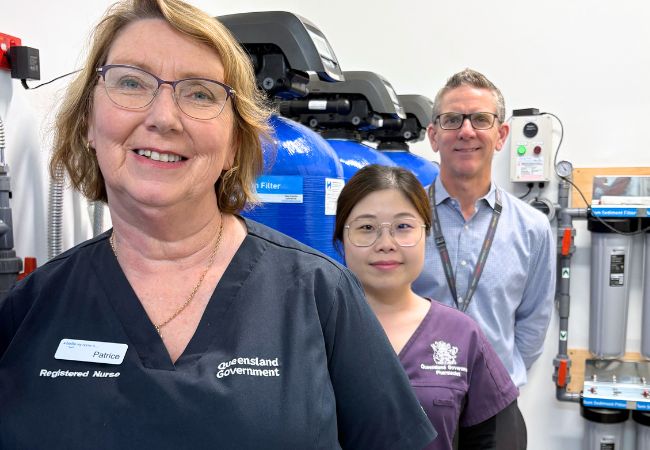
Lead author and Acting Clinical Nurse Vascular Access Patrice Latcham said careful planning and teamwork helped maintain essential care.
“Dialysis cannot simply be put on hold, so our priority was making sure every patient could continue receiving safe care as close to home as possible,” Ms Latcham said. “Our teams worked closely with each patient to understand their circumstances, including transport, accommodation, medications and individual treatment needs.
The team contacted and rescheduled patients, moved equipment and medications, arranged temporary accommodation and coordinated alternative treatment at Redland Hospital.
“The experience showed how important it is to have strong plans, current patient contact details and teams that can adapt quickly.
“With storm season approaching, we are taking those lessons forward, so we are ready to support our patients if severe weather affects our services again.”
Director Kidney Dialysis Services Dr David Mudge said research from around the world had shown that when severe weather and other natural disasters disrupted dialysis services, the consequences for patients could be significant, and lead to increased hospitalisations and poorer health outcomes.
“Because we had already experienced and learned from previous disasters, we had a well-developed plan that could be activated immediately when Tropical Cyclone Alfred threatened our service," he said. “That preparation allowed us to continue to deliver lifesaving treatment to every patient without any adverse outcomes.
“By sharing our experience, we hope to provide a practical framework that other dialysis services can adapt to strengthen their own emergency preparedness.”
The team's research will be showcased at this year's Bayside Health Service Research Symposium. The Symposium will include presentations from local researchers, panel discussions, poster exhibitions, and networking opportunities, both in-person and online.
Register now and join us for a day of learning and innovation! Learn more about the symposium on our website.
The research was written by Patrice Latcham, Vivien Chow and Dr David Mudge and published in Advances in Public Health.The Impact of a Tropical Cyclone on the Evacuation of a 12‐Chair Dialysis Service in Southeast Queensland